
- luxurysedandc
Why Are Luxury Car Services Becoming More Popular for Everyday Transportation?
Quick Answer: Luxury car services are becoming more popular for everyday transportation because modern commuters increasingly prioritize time efficiency, reliability, safety, and consistent service over basic cost savings. As urban congestion rises and ride-hailing services become more variable, professionally managed transportation offers predictable pricing, reduced stress, and a more productive travel experience. |
Daily transportation used to be a simple decision. Drive yourself or book a ride. Today, that choice feels far more complex. Commutes stretch longer as traffic thickens. Parking in city centers becomes a daily gamble. Ride-hailing prices spike without warning. What was once routine travel now carries unpredictability, stress, and lost time.
At the same time, professionals are rethinking what “cost” really means. Is it just the fare, or the missed call during traffic, the anxiety of navigating congestion, or the time wasted circling for parking? For many commuters, convenience, consistency, and reliability are increasingly outweighing basic price comparisons.
This shift in mindset is helping luxury car services move beyond special occasions and into everyday transportation. What was once viewed as indulgent is increasingly seen as structured, dependable mobility designed for modern urban life.
How Has Urban Congestion Reshaped Daily Transportation Needs?
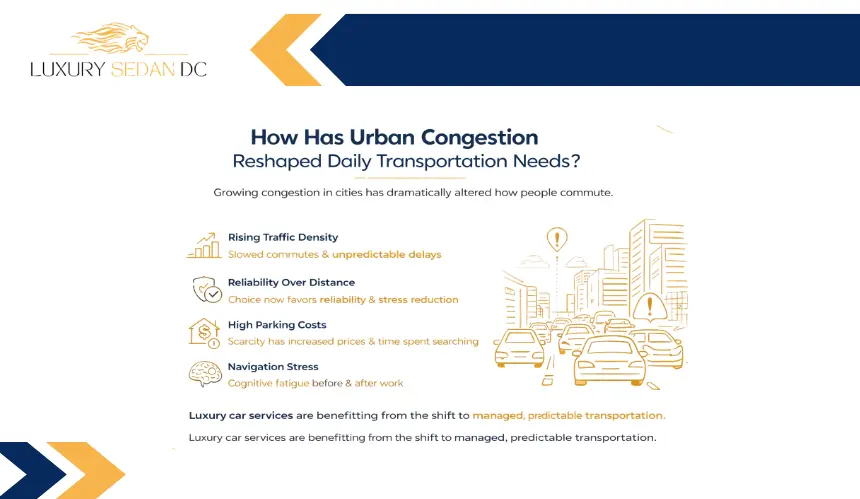
Urban mobility has changed dramatically over the past decade. Population growth in metropolitan areas, expanding business districts, and increased vehicle density have transformed routine commuting into a time-consuming and often unpredictable experience. As congestion intensifies, transportation decisions are no longer based solely on distance but on reliability and stress management.
Luxury car services are benefiting from this shift because they are structured around controlled, managed transportation rather than reactive travel.
Rising Traffic Density and Unpredictable Commute Times
Major cities are experiencing longer average commute times due to sustained traffic congestion. Delays caused by peak-hour bottlenecks, construction zones, and road closures reduce schedule predictability. For professionals with time-sensitive appointments, even minor delays can disrupt an entire day.
Professionally managed transportation reduces uncertainty by:
- Monitoring live traffic conditions
- Adjusting routes in real time
- Allocating buffer time for high-risk travel windows
- Leveraging driver familiarity with local traffic patterns
Did You Know?
Global congestion studies consistently show that commuters in dense urban centers can lose dozens of hours annually to traffic delays. This cumulative time loss has measurable economic and productivity implications.
Parking Scarcity and Increasing Urban Costs
In high-density districts, parking availability is declining while costs are rising. Daily parking fees, garage rates, and time spent locating available spaces add both financial and mental strain to routine travel.
Luxury transportation eliminates the need for parking entirely. Direct drop-off and pickup removal:
- Circling for open spaces
- Parking meter limitations
- Garage fee accumulation
- Walking time from the parking facilities
For short urban trips, these hidden costs can rival or exceed standard transportation fares.
Navigation Stress and Cognitive Fatigue
Driving in congested environments demands constant attention. Lane changes, traffic signals, unpredictable pedestrian movement, and GPS adjustments increase cognitive load. Over time, this contributes to commuter fatigue and reduced focus before arriving at work or appointments.
With a luxury car service, passengers shift from active driver to managed traveler. This allows time for:
- Reviewing schedules
- Responding to messages
- Preparing for meetings
- Simply decompressing between commitments
As congestion continues to redefine urban commuting, convenience is no longer seen as a luxury. It is increasingly seen as a strategic response to modern transportation pressures.
Why Are More People Prioritizing Time Over Transportation Cost?
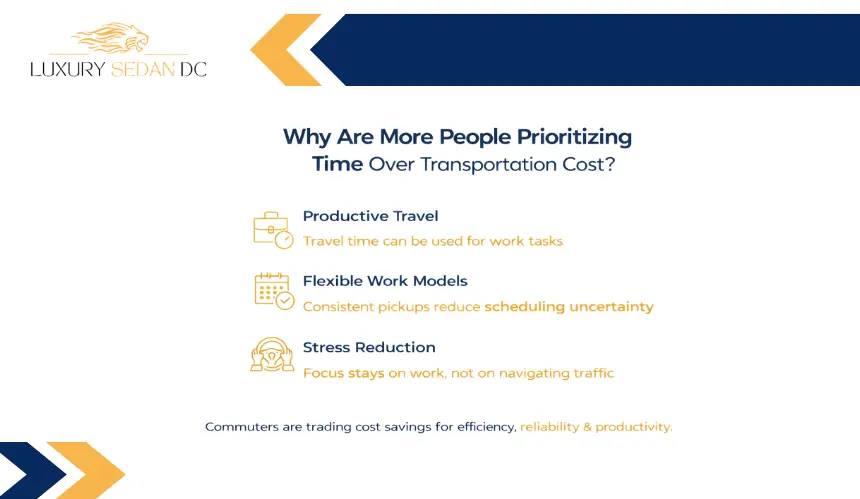
The increasing demand for luxury car services in everyday transportation reflects a shift in how value is calculated. Instead of comparing fares alone, commuters are weighing time efficiency, reliability, and productivity against basic cost savings.
How Does Travel Time Translate Into Productivity?
For professionals, entrepreneurs, and remote workers, time has direct economic value. When commuting time can be used for calls, scheduling, or preparation, transportation becomes a productivity tool rather than a passive expense.
With a luxury car service:
- Passengers can work during transit
- Meetings can be taken en route
- Preparation continues between destinations
When driving independently, that time is consumed by traffic navigation and vehicle operation. The ability to convert travel time into usable time is a major factor driving daily adoption.
Why Does Flexible Work Increase Demand for Managed Transportation?
Hybrid and mobile work models require movement between offices, client locations, airports, and shared workspaces. These dynamic schedules demand consistent arrival times and predictable routing.
Luxury transportation supports this by offering:
- Scheduled pickups
- Professional route management
- Reduced delays caused by parking or navigation
As daily mobility becomes less routine and more appointment-driven, reliability becomes more important than minor fare differences.
Does Reducing Commuting Stress Improve Daily Performance?
Driving in congested areas increases cognitive load. Continuous decisions related to traffic, parking, and timing create mental fatigue before work even begins.
With a professional driver handling logistics, passengers avoid:
- Parking searches
- Route recalculations
- Traffic-related stress
Reducing operational strain helps preserve mental clarity, which is increasingly valued in high-performance work environments.
The rising preference for luxury car services is therefore not only about comfort. It is directly tied to how modern commuters evaluate time, focus, and daily efficiency.
How Is the Experience Economy Influencing Everyday Transportation Choices?
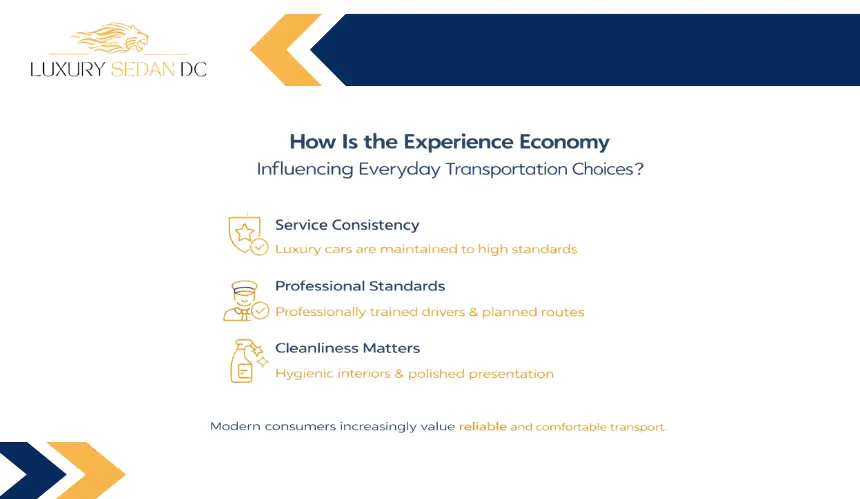
Luxury car services are gaining daily traction because transportation is no longer viewed as a purely functional task. Modern consumers increasingly evaluate services based on consistency, comfort, and overall experience rather than solely on cost. This broader shift, often described as the experience economy, is influencing mobility decisions.
Why Does Service Consistency Matter More Than Ever?
Ride-hailing platforms and informal transport options can vary significantly from trip to trip. Vehicle condition, driver professionalism, punctuality, and route decisions may differ each time. That variability creates uncertainty in daily schedules.
Luxury car services differentiate themselves through structured standards. Vehicles are maintained to consistent cleanliness and presentation levels. Drivers are professionally trained and scheduled in advance. For daily commuters who rely on predictable arrival times, consistency becomes a functional benefit rather than a luxury feature.
How Do Cleanliness and Professionalism Impact Daily Use?
Post-pandemic expectations around hygiene and service presentation have increased across industries. Transportation is no exception. A controlled fleet environment with standardized cleaning protocols offers reassurance to regular users.
Professional appearance and etiquette also influence perception. For individuals attending meetings, hosting clients, or holding high-visibility roles, the arrival experience can shape first impressions. Every day, transportation is increasingly tied to professional image management.
Is Luxury Becoming a Practical Choice Rather Than a Status Symbol?
The normalization of premium services across industries has reshaped consumer behavior. What was once reserved for special occasions is now viewed as accessible through app-based booking systems and subscription models.
Technology has reduced friction in accessing luxury transportation. Digital reservations, transparent pricing, and recurring service options have repositioned these services from occasional indulgence to structured daily mobility solutions.
The growing appeal is therefore less about exclusivity and more about predictable, managed travel that aligns with modern expectations of comfort and reliability.
Major Reasons Behind the Growth of Luxury Car Services?
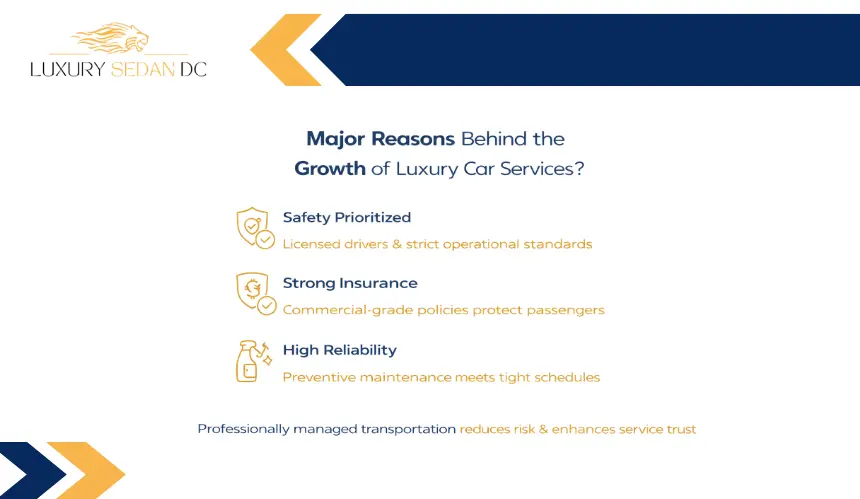
Safety and operational reliability are becoming central decision factors in everyday transportation. As commuters evaluate risk exposure, insurance protection, and service consistency, professionally managed transportation is gaining stronger appeal.
How Do Professional Driver Standards Improve Safety?
Luxury car services typically employ trained, commercially licensed drivers. These drivers often undergo:
- Background screening
- Defensive driving training
- Local route familiarity assessments
- Periodic performance evaluations
This structured oversight differs from models in which drivers operate independently, with varying levels of experience.
Did You Know?
According to traffic safety research from the National Highway Traffic Safety Administration (NHTSA), driver inattention and unfamiliar roadway conditions are leading contributors to urban accidents. Professional drivers who operate within defined service zones daily tend to develop route familiarity that reduces reaction-time variability in congested areas.
Does Commercial Insurance Offer Stronger Protection?
Luxury transportation providers usually operate under commercial auto insurance policies. These policies are designed for passenger transport and often carry higher liability coverage limits than standard personal auto policies.
In contrast, personal vehicle insurance or certain ride-share coverage tiers may include deductibles, coverage gaps, or layered liability structures depending on trip status.
Did You Know?
Commercial passenger transportation insurance limits are often significantly higher than minimum personal auto insurance requirements in most states. Higher coverage thresholds are designed to protect both passengers and third parties in the event of an accident.
Why Does Reliability Matter in Daily Transportation?
Reliability extends beyond arrival time. It includes vehicle condition, driver punctuality, and service accountability.
Professionally managed fleets operate on scheduled maintenance cycles. Vehicles are regularly inspected and serviced to reduce breakdown risk.
Did You Know?
Fleet management studies show that preventive maintenance programs can reduce unexpected vehicle downtime by over 30 percent compared to reactive maintenance models. This directly improves service reliability for repeat customers.
How Does Reduced Risk Influence Daily Adoption?
As transportation becomes a recurring daily decision, commuters assess not only cost but exposure to risk. Choosing a service where:
- The driver is professionally accountable
- Insurance coverage is commercial-grade
- Fleet maintenance follows structured schedules
creates a perception of controlled risk.
For many urban professionals, this combination of safety oversight and reliability standards is a significant reason luxury car services are transitioning from occasional use to everyday transportation solutions.
Is Cost Comparison Changing the Perception of Luxury Transportation?
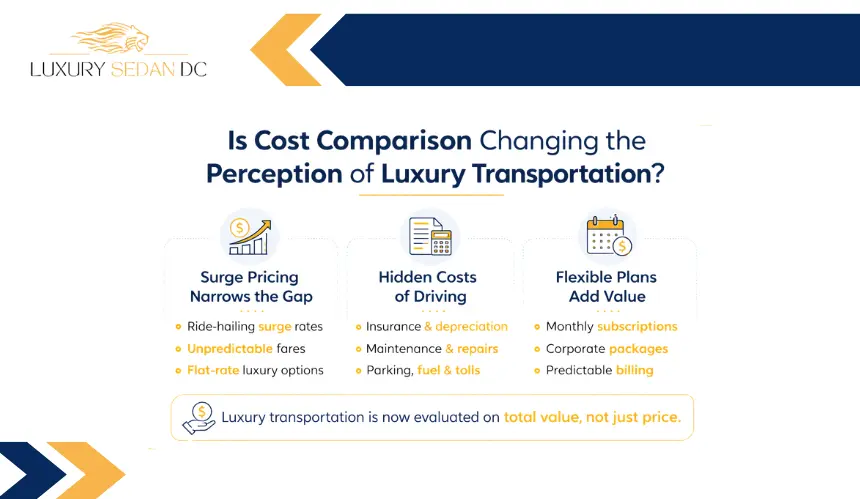
A major reason luxury car services are becoming more common in daily transportation is that the cost gap is no longer as wide as it once seemed. When commuters evaluate total mobility expenses rather than base fares alone, the comparison becomes more nuanced.
Are Ride-Hailing Surge Prices Reducing the Cost Advantage?
On-demand ride platforms use dynamic pricing models that increase fares during peak demand, high traffic periods, and major events. For daily commuters traveling during rush hours, pricing volatility can make monthly transportation spending unpredictable.
Did You Know?
During peak demand periods in major metropolitan areas, ride-hailing surge multipliers can significantly increase trip fares compared to off-peak pricing. For commuters traveling at consistently high-demand hours, this can narrow the cost difference between premium services and standard ride options.
Luxury car services often operate on flat-rate or hourly pricing structures, which provide more predictable budgeting for regular users.
How Do Hidden Costs of Driving Impact Daily Expenses?
When individuals rely on personal vehicles for daily commuting, the true cost extends beyond fuel. Ongoing expenses may include:
- Insurance premiums
- Vehicle depreciation
- Maintenance and repairs
- Parking fees
- Tolls
Did You Know?
Automotive cost studies consistently show that vehicle ownership expenses include depreciation as the largest long-term cost component. Many drivers underestimate this factor when comparing alternatives to personal car use.
When these ownership costs are distributed across daily usage, professionally managed transportation can become competitive for high-frequency urban travel.
Are Subscription and Corporate Plans Making Luxury More Accessible?
Some luxury transportation providers now offer monthly mobility plans or corporate transportation agreements. These structured plans reduce per-trip variability and encourage recurring use.
Predictable billing combined with scheduled service availability transforms luxury transportation from occasional convenience into structured mobility management.
As consumers shift toward mobility-as-a-service rather than ownership, perceptions of cost are evolving. Luxury car services are increasingly evaluated not against the cheapest ride option, but against the total economic and stress cost of daily transportation alternatives.
Who Is Driving the Shift Toward Daily Use of Luxury Car Services?
The growing popularity of luxury car services for everyday transportation is not limited to a single demographic. Adoption is expanding across professional, urban, and high-mobility segments that prioritize reliability and structured travel.
Are Urban Residents Without Personal Vehicles Increasing Demand?
In dense metropolitan areas, some residents are opting out of car ownership altogether. Rising insurance costs, limited parking availability, and urban congestion make maintaining a private vehicle less practical.
Did You Know?
Urban mobility studies show that car ownership rates are declining in certain high-density city centers, particularly among younger professionals who prefer flexible transportation alternatives over long-term vehicle expenses.
For these individuals, luxury car services serve as part of a broader mobility strategy rather than a replacement for occasional special-event travel.
Are Frequent Flyers and High-Mobility Lifestyles Contributing to Growth?
Travel-heavy lifestyles increase the need for dependable airport transfers and intercity transportation. Missed flights, late pickups, and inconsistent service can disrupt entire travel itineraries.
Luxury services offer structured scheduling, which becomes particularly valuable for:
- Weekly business travelers
- Multi-city professionals
- Event coordinators managing tight timelines
As travel frequency increases, so does the demand for reliable, repeatable transportation experiences.
Is Luxury Car Service Becoming the New Standard for Urban Mobility?
The rising daily use of luxury car services suggests demand that extends beyond temporary demand. It reflects a broader shift in how transportation is positioned within modern urban life. Instead of being reserved for special events, premium transportation is increasingly viewed as structured mobility infrastructure.
Has Technology Made Luxury Transportation More Accessible?
Digital booking platforms have removed many of the barriers that once limited access to premium services. Mobile apps, instant confirmations, transparent pricing, and account-based billing have simplified the process.
Consumers no longer need to coordinate through complex phone reservations. On-demand scheduling and real-time updates have normalized access, making luxury services functionally similar to other daily-use platforms.
Technology has reduced friction, accelerating adoption.
Is Mobility Shifting From Ownership to Service-Based Models?
The concept of mobility-as-a-service continues to expand. Instead of prioritizing vehicle ownership, many urban commuters are prioritizing access when needed.
Did You Know?
Transportation trend analyses consistently show that younger urban demographics are more open to service-based mobility models than traditional ownership, particularly in high-density regions where parking and insurance costs are elevated.
Luxury car services fit into this service-based framework by offering structured access without long-term ownership responsibility.
Does Everyday Luxury Reflect Changing Lifestyle Standards?
Premium services across industries have become more normalized. What was once perceived as indulgent is increasingly evaluated through the lens of efficiency and reliability.
For commuters who:
- Travel frequently
- Operate on strict schedules
- Work in high-performance environments
Managed transportation aligns with lifestyle demands rather than symbolic status.
What Does the Future of Everyday Transportation Look Like With Luxury Car Services?
The growing daily use of luxury car services suggests a structural change in urban mobility rather than a temporary trend. As congestion increases, work becomes more mobile, and consumers prioritize reliability, transportation is being evaluated as a performance tool instead of a basic commute solution.
Will Managed Transportation Replace Traditional Commuting Models?
In high-density urban centers, daily driving is becoming less practical due to traffic congestion, limited parking, and rising ownership costs. Professionally managed transportation offers an alternative where:
- Driving responsibility is outsourced
- Scheduling is structured
- Reliability is prioritized
- Time can be repurposed productively
For many commuters, the question is shifting from “Can I drive myself?” to “Is it efficient to drive myself?”
Is Luxury Transportation Becoming an Efficiency Standard?
Luxury car services are increasingly positioned around operational efficiency rather than exclusivity. Predictable pickup times, professional accountability, and controlled fleet standards provide measurable advantages in daily scheduling.
Did You Know?
Transportation research consistently shows that commute predictability significantly influences overall job satisfaction and daily stress levels. Reliable arrival times reduce performance anxiety associated with traffic uncertainty.
As predictability becomes a priority, structured services become increasingly relevant.
Will Everyday Use Continue to Expand?
Adoption is likely to grow in segments where:
- Time has high economic value
- Travel frequency is high
- Urban infrastructure is congested
- Vehicle ownership becomes less attractive
Luxury transportation is evolving from occasional premium service into a strategic mobility choice for specific commuter profiles.
Frequently Asked Questions
Are luxury car services only meant for special occasions?
Luxury car services were traditionally associated with weddings, corporate events, and VIP travel. However, increasing urban congestion, unpredictable ride-hailing costs, and flexible work schedules have expanded their use into everyday commuting and routine airport transportation for professionals and frequent travelers.
Is using a luxury car service daily practical?
Daily use can be practical for individuals who prioritize reliability, time efficiency, and reduced stress. For professionals with tight schedules or frequent meetings, structured transportation may improve punctuality and allow travel time to be used productively rather than spent navigating traffic.
How do luxury car services compare to ride-hailing apps?
Luxury car services typically offer pre-scheduled bookings, professional drivers, commercial insurance coverage, and consistent vehicle standards. Ride-hailing platforms operate on dynamic availability and pricing models, which may lead to variability in driver experience, vehicle condition, and fare stability.
Do luxury car services offer subscription or corporate plans?
Many providers now offer monthly mobility plans or corporate transportation contracts. These arrangements provide predictable billing, scheduled service access, and standardized service quality, making luxury transportation more accessible for frequent or business-related travel.
Is luxury transportation safer than regular ride-share options?
Luxury car services generally employ professionally screened drivers and operate under commercial insurance policies designed for passenger transport. This structured oversight can provide higher levels of accountability and consistency compared to more variable gig-based transportation models.
Why are urban professionals increasingly choosing luxury transportation?
Urban professionals often face tight schedules, traffic congestion, and frequent travel commitments. Structured transportation reduces unpredictability, supports punctuality, and enables efficient use of travel time, aligning with performance-driven work environments.