

- luxurysedandc
How Do Professional Car Services Enhance Safety and Reliability for Travelers?
Quick Answer: Professional car services enhance safety and reliability by combining vetted, professionally trained drivers with commercially insured vehicles, structured dispatch systems, preventive fleet maintenance, and real-time route monitoring. These layered controls reduce driver-related risk, prevent service delays, and create predictable, accountable transportation for travelers. |
Travel disruptions rarely happen because of distance. They happen because of unpredictability. A late pickup, traffic miscalculation, distracted driving, or vehicle failure can quickly turn a routine trip into a costly setback. For airport departures, executive meetings, or time-sensitive events, reliability is not optional.
Safety concerns add another layer. National traffic data continues to show thousands of crashes linked to distracted driving each year, underscoring the critical importance of focused, trained driving for passenger protection.
Professional car services are structured to reduce these risks through vetted drivers, commercial insurance coverage, managed dispatch systems, and preventive fleet maintenance. The difference lies not in luxury, but in layered safety controls and operational oversight designed to keep travel predictable and secure.
What Makes Professional Car Services Safer Than Other Options?
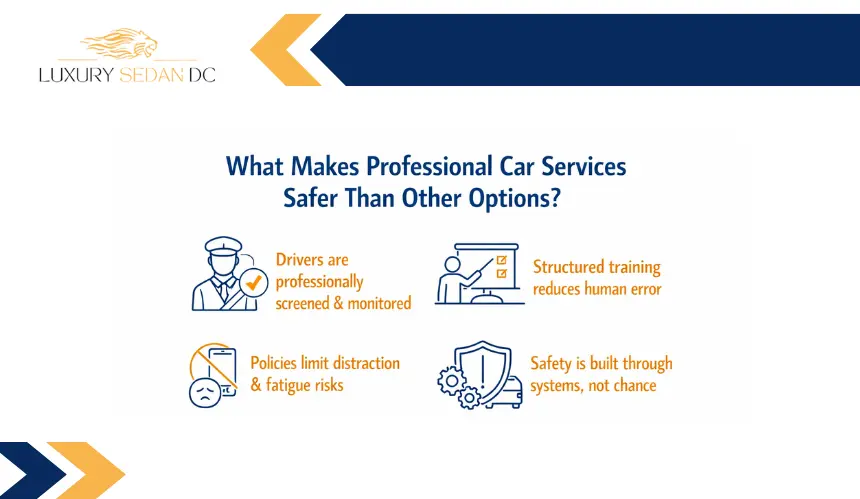
Professional car services enhance safety by reducing uncontrolled variables. Instead of relying on individual driving habits or informal availability models, these services operate within structured hiring, training, and oversight systems designed specifically for passenger transport.
How Are Drivers Screened and Qualified?
Reputable professional car services conduct formal screening before a driver begins transporting passengers. This process often includes:
- Driving record review
- Background screening
- Verification of licensing and eligibility
- Service conduct standards
Unlike casual transportation arrangements, professional operators treat drivers as accountable representatives of the company. Ongoing performance monitoring may also be part of the evaluation process.
Driver qualification is foundational because human behavior remains one of the largest contributors to roadway risk.
What Safety Training Do Chauffeurs Receive?
Professional chauffeurs are typically trained beyond basic licensing requirements. Training may include:
- Defensive driving techniques
- Hazard anticipation
- Safe passenger loading and unloading procedures
- Adverse weather driving response
Did You Know?
According to national highway safety data, distracted driving continues to contribute to thousands of fatal crashes annually. Structured training and focused-driving policies directly address these high-risk behaviors.
Training reduces reactive driving patterns and promotes controlled vehicle operation under varying road conditions.
How Do Focused-Driving Policies Reduce Risk?
Professional services often implement internal policies designed to limit distractions and manage fatigue. These may include:
- Restrictions on device use while driving
- Scheduled shift controls
- Clear rest requirements
Unlike self-driving travelers who may drive while fatigued or under time pressure, professional drivers operate within monitored performance expectations.
Safety improvements in professional car services are not incidental. They result from systematic screening, structured training, and policy enforcement designed to reduce preventable risk on every trip.
Why Does Commercial Insurance Strengthen Passenger Protection?
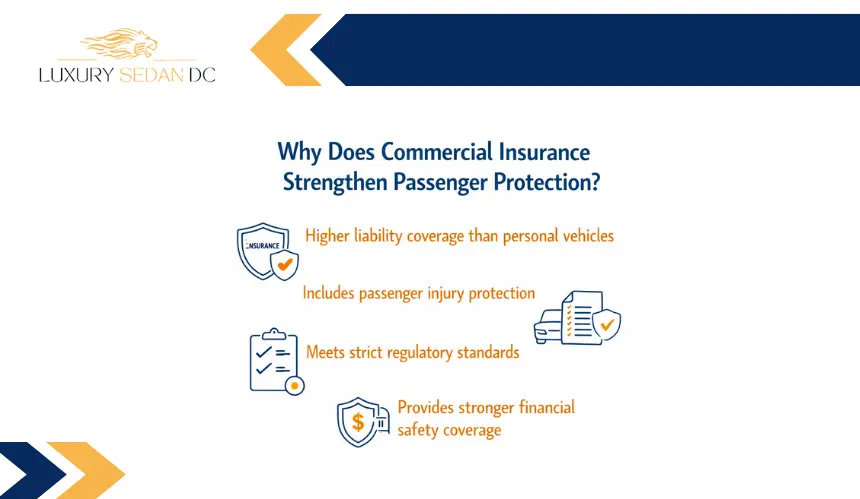
Insurance structure is a critical but often overlooked safety layer in professional car services. Unlike personal vehicles or informal transportation arrangements, professional operators carry commercial auto insurance designed specifically for passenger transport.
How Is Commercial Coverage Different From Personal Auto Insurance?
Commercial auto insurance policies are structured to reflect higher exposure risk because they transport paying passengers. These policies generally include:
- Higher liability coverage limits
- Broader third-party protection
- Passenger injury coverage provisions
- Business-use endorsements
Did You Know?
Passenger transportation providers are typically required to carry higher liability limits than private drivers. These elevated coverage standards are designed to protect both travelers and other road users in the event of a serious accident.
Higher coverage limits increase operating costs, but they significantly strengthen financial protection for passengers.
What Compliance Standards Do Professional Services Follow?
Professional car services must operate under defined regulatory frameworks that may include:
- Business transportation licensing
- Periodic vehicle inspections
- Record-keeping requirements
- Commercial operating authority registration
These compliance requirements create accountability. Companies that fail to meet standards risk penalties or suspension.
In regulated commercial contexts, certain operators are also subject to controlled substance and alcohol testing rules, adding another layer of safety oversight.
How Do Dispatch Systems Improve On-Time Reliability?
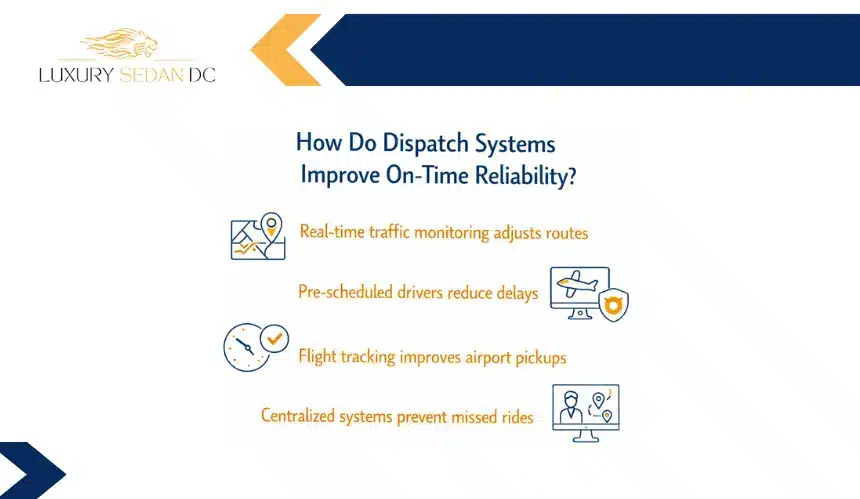
Reliability in professional car services is not left to chance. Behind every scheduled pickup is a structured dispatch system designed to manage timing, routing, and contingency planning.
How Is Route Planning Managed in Real Time?
Professional dispatch teams use live traffic monitoring tools to adjust routes dynamically. Instead of relying solely on static navigation, they account for:
- Congestion patterns
- Road closures
- Construction zones
- Weather-related delays
Did You Know?
Urban traffic studies consistently show that congestion can increase travel time by 20–40% during peak hours compared to free-flow conditions. Real-time route monitoring helps reduce the impact of these fluctuations on scheduled arrivals.
Active route management improves arrival accuracy, especially for time-sensitive trips such as airport transfers or executive meetings.
What Prevents Missed Pickups and Late Arrivals?
Structured scheduling systems assign drivers in advance, allocate buffer time, and confirm trip details before dispatch. This reduces common reliability failures such as:
- Double-booked drivers
- Last-minute cancellations
- Poor coordination
Unlike informal transportation models where driver availability can fluctuate, professional services operate under centralized oversight.
How Does Flight Tracking Stabilize Airport Transfers?
For airport pickups, many professional car services monitor flight arrival times in real time. This allows dispatch teams to adjust pickup timing automatically if a flight is delayed or arrives early.
Instead of the traveler coordinating changes, the system adapts to updated arrival data. This reduces uncertainty and improves overall reliability for inbound passengers.
Dispatch infrastructure transforms transportation from reactive to managed. By combining scheduling discipline with real-time monitoring, professional car services significantly improve on-time performance and predictability.
How Does Fleet Maintenance Prevent Breakdowns and Service Failures?
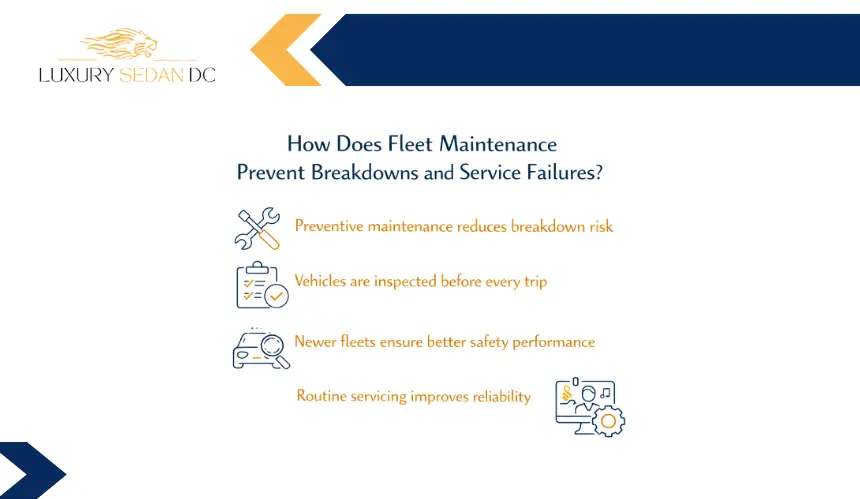
Vehicle condition is a direct contributor to both safety and reliability. Professional car services enhance traveler protection by operating under structured fleet maintenance programs rather than relying on informal or reactive vehicle upkeep.
What Preventive Maintenance Protocols Are Used?
Professional fleets typically follow scheduled maintenance cycles that include:
- Routine oil and fluid inspections
- Brake system checks
- Tire condition and pressure monitoring
- Battery and electrical system testing
- Manufacturer-recommended service intervals
Preventive maintenance reduces the likelihood of mechanical failure during service. Vehicles are inspected before dispatch to confirm readiness for scheduled trips.
Did You Know?
Fleet management research shows that preventive maintenance programs significantly reduce unexpected vehicle downtime compared to reactive repairs. Lower breakdown rates directly improve on-time service reliability.
Why Are Professional Fleets Replaced More Frequently?
Premium car services often rotate vehicles out of active service sooner than private owners. This practice maintains:
- Consistent safety performance
- Reduced mechanical wear risk
- Updated safety features
- Higher reliability standards
Newer vehicles are more likely to include advanced driver-assistance systems such as collision mitigation alerts and lane stability controls. While these technologies do not eliminate risk, they provide additional safety support layers.
Structured fleet management ensures that vehicles meet consistent performance expectations. This operational discipline minimizes service interruptions and strengthens reliability for travelers.
Next, technology-based monitoring systems further enhance safety by improving driver behavior oversight and operational transparency.
How Does Technology Improve Driver Safety and Service Reliability?
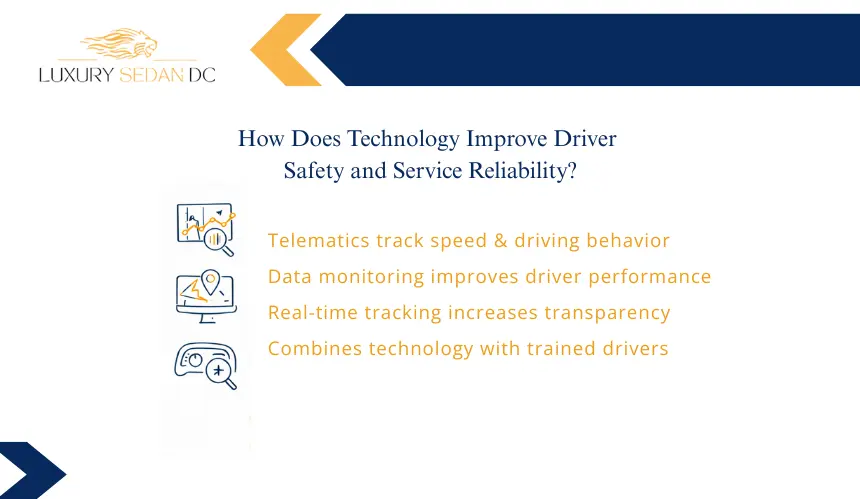
Technology plays a growing role in strengthening both safety performance and operational predictability in professional car services. Beyond navigation apps, many operators integrate monitoring and analytics systems that provide measurable oversight.
What Is Telematics and Why Does It Matter?
Telematics systems collect real-time data from vehicles and drivers. These systems can monitor:
- Speed consistency
- Harsh braking or acceleration
- Idle time
- Route adherence
This data allows operators to identify risky driving patterns and implement corrective coaching when needed. Continuous monitoring creates accountability and encourages consistent driving standards.
Did You Know?
Transportation safety research has linked telematics implementation with measurable reductions in crash rates across commercial fleets. Monitoring and feedback systems help reduce high-risk driving behaviors over time.
How Does Data Monitoring Strengthen Reliability?
Telematics and fleet tracking tools also improve service stability by:
- Confirming vehicle location accuracy
- Providing real-time trip status updates
- Supporting dispatch adjustments
- Tracking service punctuality metrics
These systems reduce uncertainty and provide transparency during time-sensitive travel.
Does Technology Replace Driver Skill?
Technology supports, but does not replace, professional training. Defensive driving, route awareness, and passenger handling remain human competencies. However, combining trained drivers with data-driven oversight creates a layered safety model.
Professional car services enhance safety and reliability by integrating people, process, and technology. Structured driver standards, preventive maintenance, dispatch coordination, and telematics oversight work together to reduce risk and improve travel predictability.
What Should Travelers Verify Before Booking a Professional Car Service?
Not all car services operate under the same standards. While many providers promote safety and reliability, travelers benefit from confirming specific operational credentials before booking.
Are Drivers Professionally Screened and Trained?
Travelers should confirm that drivers undergo:
- Background screening
- Driving record review
- Ongoing performance evaluation
- Defensive driving training
Professional oversight reduces variability in driving behavior and strengthens passenger safety.
Does the Company Carry Commercial Insurance?
Ask whether the service operates under commercial auto insurance designed for passenger transportation. Commercial coverage typically carries higher liability limits than personal auto policies, offering stronger financial protection in the event of an incident.
Verifying insurance structure ensures the service is operating within regulated frameworks.
Is There a Structured Dispatch and Tracking System?
Reliable providers use centralized dispatch systems that monitor:
- Driver assignments
- Real-time vehicle location
- Traffic conditions
- Flight arrivals for airport pickups
A structured dispatch environment reduces missed pickups and improves schedule accuracy.
Does the Fleet Follow Preventive Maintenance Protocols?
Travelers can ask whether vehicles are maintained on scheduled service intervals and inspected regularly. Documented maintenance programs indicate commitment to operational reliability.
Are Safety Standards Transparent?
Professional services should clearly communicate:
- Licensing credentials
- Insurance coverage
- Service inclusions
- Waiting time policies
Transparency signals structured operations rather than informal arrangements.
Verifying these factors helps travelers distinguish between basic transportation availability and professionally managed safety systems.
Frequently Asked Questions
Is a professional car service safer than rideshare options?
Professional car services typically operate under structured driver screening, commercial insurance coverage, and centralized dispatch oversight. These layers of accountability can reduce variability in driver qualifications and vehicle standards compared to models that rely on independent driver availability.
How do professional car services reduce the risk of late arrivals?
Reliability is strengthened through scheduled driver assignments, real-time traffic monitoring, buffer planning, and flight tracking for airport pickups. Centralized dispatch systems allow route adjustments and coordination before delays become service failures.
Do professional car services use commercial insurance?
Reputable providers operate under commercial auto insurance policies designed for passenger transportation. These policies generally carry higher liability limits than personal auto coverage, providing stronger financial protection for travelers.
What maintenance standards do professional fleets follow?
Professional fleets typically follow preventive maintenance schedules that include routine inspections, manufacturer-recommended servicing, and pre-trip vehicle readiness checks. Structured maintenance reduces mechanical failures and improves overall trip reliability.
Does telematics actually improve driver safety?
Telematics systems monitor driving behavior such as speed consistency and harsh braking. Transportation safety research has associated these monitoring systems with reductions in risky driving patterns and measurable improvements in crash prevention outcomes.
When is a professional car service the most reliable option?
Professional services are particularly valuable for time-sensitive travel such as airport transfers, executive meetings, corporate events, and formal transportation arrangements where punctuality, accountability, and structured safety controls are priorities.