
- luxurysedandc
What Trends Are Shaping the Future of Luxury Ground Transportation?
Quick Answer: The future of luxury ground transportation is being shaped by several major trends, including the rise of electric luxury vehicles, connected smart car technology, hyper-personalized passenger experiences, subscription-based mobility models, and stronger sustainability initiatives. Modern luxury transportation services are no longer defined only by high-end vehicles and chauffeur services. Instead, the industry is evolving into a technology-driven mobility ecosystem that focuses on comfort, connectivity, environmental responsibility, and highly customized travel experiences. Advancements in vehicle technology, digital booking platforms, and smart fleet management systems are allowing transportation providers to deliver more efficient and personalized services. At the same time, new mobility concepts such as electric luxury fleets, connected vehicle networks, and emerging air mobility solutions are expanding the possibilities for premium travel. These innovations are transforming how executives, business travelers, and high-end clients experience luxury transportation in the years ahead. |
Luxury transportation has traditionally been associated with elegant limousines, professional chauffeurs, and exclusive travel experiences. While these elements still define premium mobility, the industry is undergoing a major transformation driven by technology, sustainability initiatives, and changing traveler expectations. Today’s passengers, particularly executives, corporate travelers, and high-net-worth individuals, are looking for transportation services that combine comfort, efficiency, connectivity, and personalization. As a result, luxury ground transportation is evolving into a sophisticated mobility ecosystem that goes far beyond traditional chauffeur services.
Modern advancements in vehicle technology, digital mobility platforms, and intelligent fleet management systems are reshaping how luxury transportation providers operate. Electric luxury vehicles, connected smart cars, and AI-powered dispatch systems are improving efficiency while enabling more personalized passenger experiences. At the same time, sustainability concerns and innovative mobility concepts are encouraging the development of eco-friendly luxury fleets and new transportation models. Understanding the trends shaping luxury ground transportation provides valuable insight into how premium travel will continue to evolve in an increasingly technology-driven world.
How Has Luxury Ground Transportation Evolved Over Time?
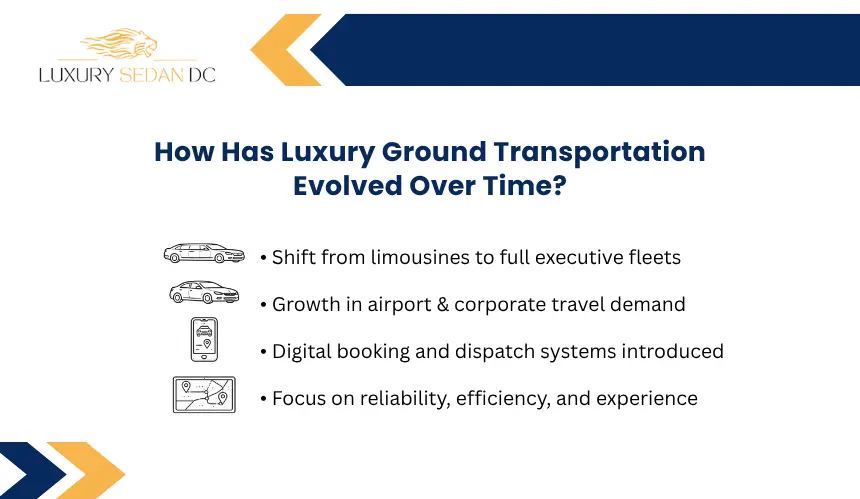
Luxury ground transportation has changed significantly over the past several decades. What once centered mainly on limousine rentals for special occasions has gradually transformed into a sophisticated premium mobility service used by executives, business travelers, and high-end clientele. Today, luxury ground transportation is driven by advanced technology, evolving passenger expectations, and the growing demand for reliable, high-quality travel experiences.
Understanding this evolution provides important context for the innovations currently shaping the future of luxury mobility.
From Traditional Limousine Services to Premium Mobility Platforms
Historically, luxury transportation was largely associated with long stretch limousines used for weddings, formal events, and celebrity travel. These services focused primarily on prestige and exclusivity rather than efficiency or technology integration. Over time, however, transportation providers expanded their fleets to include executive sedans, luxury SUVs, and premium vans designed to meet the needs of business travelers.
This shift allowed luxury transportation to become a practical option for everyday professional mobility rather than an occasional luxury service. Modern premium fleets now focus on combining comfort, reliability, and advanced vehicle technology.
Key developments in this evolution include:
- Expansion from limousines to executive vehicle fleets
- Increased demand for airport and corporate transportation
- Integration of digital booking platforms and dispatch systems
- Adoption of connected vehicle technologies
Did You Know?
Industry mobility reports indicate that corporate travel and airport transfers now represent a large share of luxury transportation bookings, highlighting how the service has expanded beyond special-event use.
The Expansion of Executive Transportation and Corporate Travel
The rise of global business travel has significantly influenced the development of luxury ground transportation. Companies increasingly rely on professional transportation services to move executives, clients, and visiting partners between airports, hotels, offices, and event venues. In these situations, reliability and professionalism are often more important than traditional luxury.
Executive transportation services now focus on:
- punctual and coordinated pickups
- professional driver standards
- comfortable work-friendly vehicle environments
- efficient travel between multiple destinations
These features make luxury transportation an important tool for corporate mobility and business travel planning.
Did You Know?
Global business travel spending has grown steadily over the past decade, with transportation reliability becoming a key factor for executives managing tight travel schedules.
How Customer Expectations Are Redefining Luxury Mobility
Passenger expectations have also changed dramatically as technology has reshaped the travel industry. Travelers now expect transportation services to offer the same convenience, transparency, and connectivity found in other modern service industries such as hospitality and digital commerce.
Today’s luxury transportation customers often expect:
- easy digital booking and trip management
- real-time vehicle tracking and updates
- personalized passenger preferences
- seamless coordination with travel schedules
These expectations have encouraged transportation providers to invest heavily in technology, customer experience systems, and modern vehicle fleets.
Did You Know?
Customer experience studies show that convenience, reliability, and personalization are among the top factors influencing premium travel service choices, including luxury transportation providers.
As luxury transportation continues to evolve, the industry is increasingly shaped by technology, corporate travel needs, and the demand for highly personalized mobility experiences.
How Is Technology Transforming Luxury Ground Transportation?
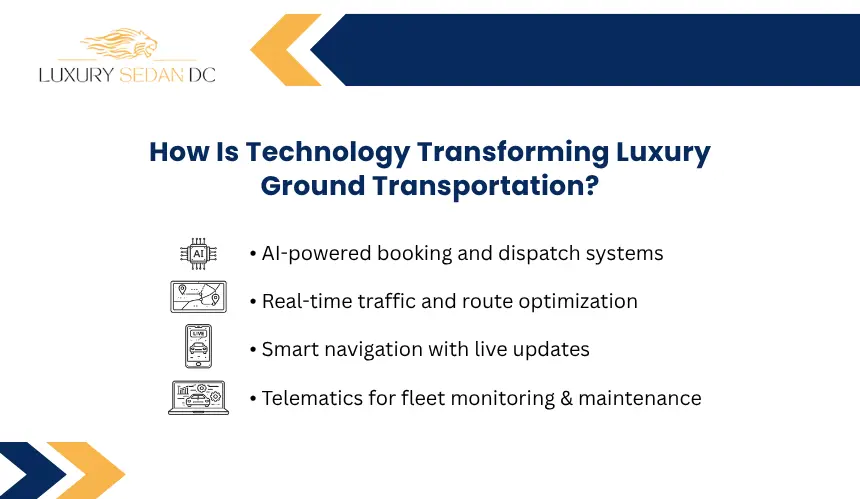
Technology has become one of the most influential forces shaping the future of luxury ground transportation. Modern premium mobility services now rely heavily on digital platforms, intelligent routing systems, and data-driven fleet management tools to deliver efficient and personalized travel experiences. These technologies help transportation providers coordinate vehicles, drivers, and passengers more effectively while improving service reliability and convenience.
As digital infrastructure continues to expand, luxury transportation companies are integrating advanced technologies to enhance both operational efficiency and passenger experience.
AI-Powered Dispatch and Intelligent Booking Platforms
Artificial intelligence and automated dispatch systems are transforming how luxury transportation services coordinate trips. Instead of manually assigning drivers or vehicles, many companies now use AI-driven systems that analyze booking data, traffic conditions, and driver availability to optimize trip scheduling.
AI-powered booking and dispatch systems can:
- Match passengers with the most suitable vehicle and driver
- Optimize route planning based on traffic conditions
- Manage multiple bookings simultaneously
- Improve response times during busy travel periods
These systems allow transportation providers to handle complex travel schedules more efficiently while maintaining consistent service quality.
Did You Know?
AI-powered dispatch platforms used in modern transportation systems can analyze large amounts of real-time traffic and trip data, helping optimize routes and reduce travel delays.
Real-Time Navigation and Smart Traffic Optimization
Advanced navigation technologies also play a major role in improving travel efficiency. Professional drivers now rely on navigation systems that continuously analyze traffic conditions, road closures, and congestion levels to identify the most efficient travel routes.
Smart navigation systems can provide:
- real-time traffic updates
- alternate route suggestions during congestion
- estimated arrival times for passengers
- integration with fleet management platforms
These features allow drivers to adapt quickly to changing traffic conditions and help passengers reach their destinations more efficiently.
Did You Know?
Modern navigation platforms use crowdsourced traffic data from millions of connected devices, allowing drivers to receive highly accurate traffic updates and route suggestions.
Fleet Telematics and Predictive Vehicle Maintenance
Luxury transportation providers also use telematics systems to monitor vehicle performance and fleet conditions. Telematics technology collects data from vehicles to track metrics such as engine performance, location, fuel efficiency, and maintenance needs.
By analyzing this data, transportation companies can identify potential mechanical issues before they cause service disruptions.
Telematics systems help fleets by:
- monitoring vehicle health and performance
- scheduling preventive maintenance
- tracking vehicle locations in real time
- improving safety and operational efficiency
Did You Know?
Predictive maintenance systems used in modern fleets can detect potential vehicle issues early, helping companies reduce unexpected breakdowns and maintain reliable service.
Through the integration of artificial intelligence, advanced navigation systems, and fleet telematics technology, luxury transportation providers are creating more efficient and technologically advanced mobility services for premium travelers.
Why Are High-End Electric Vehicles Becoming a Major Trend in Luxury Transportation?
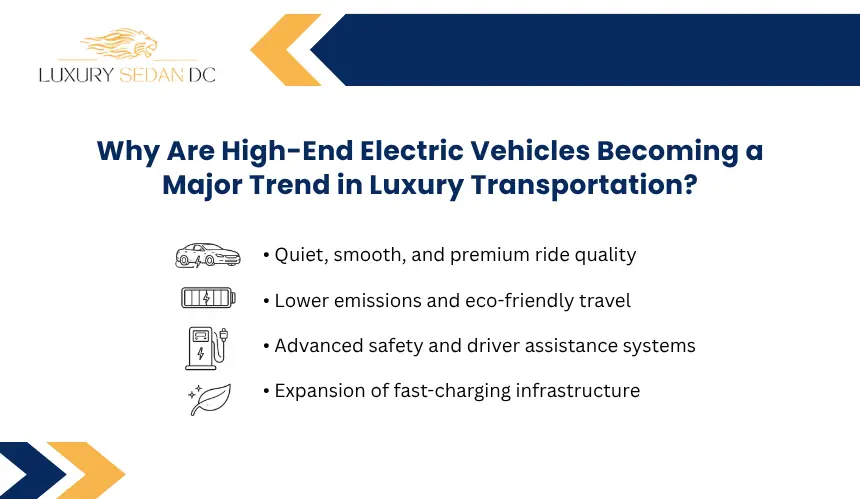
Electric vehicles (EVs) are rapidly becoming a central part of modern luxury ground transportation fleets. As sustainability concerns grow and vehicle technology advances, many premium transportation providers are introducing electric luxury sedans and SUVs to meet evolving passenger expectations. These vehicles combine high performance, quiet operation, and environmental efficiency, making them well suited for executive travel and high-end mobility services.
The shift toward electric mobility reflects both environmental priorities and the desire to enhance passenger comfort through advanced vehicle engineering.
Electric Luxury Sedans and SUVs in Premium Chauffeur Fleets
Luxury electric vehicles are increasingly being adopted by chauffeur services and executive transportation providers. Models from leading automotive manufacturers now offer long driving ranges, powerful electric drivetrains, and sophisticated interior designs that align well with premium transportation standards.
Electric vehicles commonly used in luxury fleets include:
- premium electric sedans designed for executive travel
- luxury electric SUVs offering additional space and comfort
- high-performance EVs with advanced safety and driver-assistance features
These vehicles provide smooth acceleration, minimal cabin noise, and modern digital dashboards, contributing to a refined passenger experience.
Did You Know?
Electric vehicles are known for their near-silent operation, which creates a quieter cabin environment that many passengers find more comfortable for business travel or relaxation.
Performance Advantages of Electric Luxury Vehicles
In addition to environmental benefits, electric vehicles offer several technical advantages that make them attractive for luxury transportation services. Electric drivetrains deliver instant torque, allowing vehicles to accelerate smoothly without the gear changes found in traditional internal combustion engines.
Other performance benefits include:
- smooth and quiet ride quality
- fewer mechanical vibrations
- lower operating noise levels
- advanced driver assistance technologies
These features contribute to a premium travel environment that aligns with the expectations of luxury transportation clients.
Did You Know?
Many modern electric vehicles include advanced driver assistance systems that enhance safety through features such as adaptive cruise control, lane-keeping assistance, and collision avoidance technology.
The Role of Charging Infrastructure in Premium Mobility
The expansion of EV charging infrastructure is also supporting the growth of electric luxury fleets. Fast-charging networks now allow electric vehicles to recharge quickly, making them more practical for professional transportation services that operate throughout the day.
Luxury transportation providers often plan their operations around charging availability to ensure vehicles remain ready for scheduled trips.
Charging infrastructure improvements include:
- high-speed charging stations in major cities
- expanded charging networks along highways
- fleet-based charging facilities for transportation companies
Did You Know?
Global EV infrastructure investments are expanding rapidly, with thousands of new charging stations being installed each year to support the growing adoption of electric vehicles.
As electric vehicle technology continues to advance and charging networks expand, EVs are expected to play an increasingly important role in shaping the future of luxury ground transportation fleets.
How Are Connected Smart Vehicles Changing the Luxury Travel Experience?
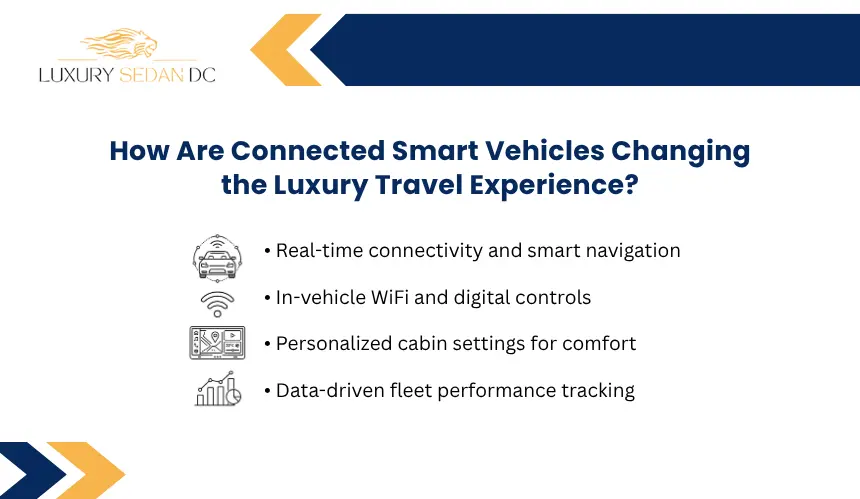
Connected vehicle technology is transforming how modern vehicles interact with digital networks, infrastructure systems, and transportation platforms. In luxury ground transportation, connected smart vehicles allow fleets to operate more efficiently while delivering enhanced passenger convenience, safety, and communication. These vehicles are equipped with sensors, communication modules, and advanced onboard software that enable them to exchange data with external systems in real time.
By integrating connectivity features, transportation providers can monitor fleet performance, optimize routes, and provide passengers with a more responsive travel experience.
Vehicle-to-Network Connectivity and Smart Navigation
Connected vehicles use vehicle-to-network (V2N) communication systems to exchange information with navigation platforms, traffic management systems, and cloud-based mobility networks. This connectivity allows vehicles to receive real-time updates on traffic conditions, road closures, and route changes.
For luxury transportation services, smart navigation systems help ensure that trips remain efficient and predictable.
Connected navigation systems can provide:
- real-time traffic data and route optimization
- predictive arrival time estimates
- alerts about road incidents or construction
- dynamic route adjustments during congestion
These capabilities allow drivers to respond quickly to changing road conditions while maintaining reliable travel schedules.
Did You Know?
Connected vehicle technology allows cars to process large amounts of real-time traffic and navigation data, helping drivers avoid congestion and reduce travel delays.
In-Vehicle Digital Systems and Passenger Connectivity
Smart vehicles also enhance the passenger experience through advanced digital systems integrated into the vehicle cabin. Luxury vehicles increasingly feature connected infotainment systems, high-speed internet access, and digital controls that allow passengers to adjust comfort settings.
These systems may allow passengers to:
- connect mobile devices to the vehicle’s entertainment system
- access onboard Wi-Fi for work or communication
- control cabin temperature and lighting settings
- monitor trip progress on digital displays
For business travelers, these features help transform vehicles into mobile workspaces that support productivity during transit.
Did You Know?
Many modern luxury vehicles now include integrated connectivity platforms that allow passengers to synchronize their devices with vehicle systems for navigation, communication, and entertainment.
Data-Driven Fleet Management for Premium Services
Connected vehicle technology also enables transportation companies to collect and analyze operational data from their fleets. Through telematics and cloud-based platforms, fleet managers can monitor vehicle location, performance, and service conditions in real time.
This data allows transportation providers to improve operational efficiency by:
- tracking vehicle usage and trip patterns
- identifying maintenance needs early
- monitoring driver performance and safety
- optimizing fleet deployment during peak demand
Did You Know?
Fleet telematics systems can generate detailed operational insights that help transportation providers improve scheduling efficiency and maintain high vehicle reliability.
As connected vehicle technology continues to evolve, it will play an increasingly important role in delivering safer, more efficient, and more personalized luxury transportation experiences.
What Role Does Personalization Play in the Future of Luxury Passenger Experiences?
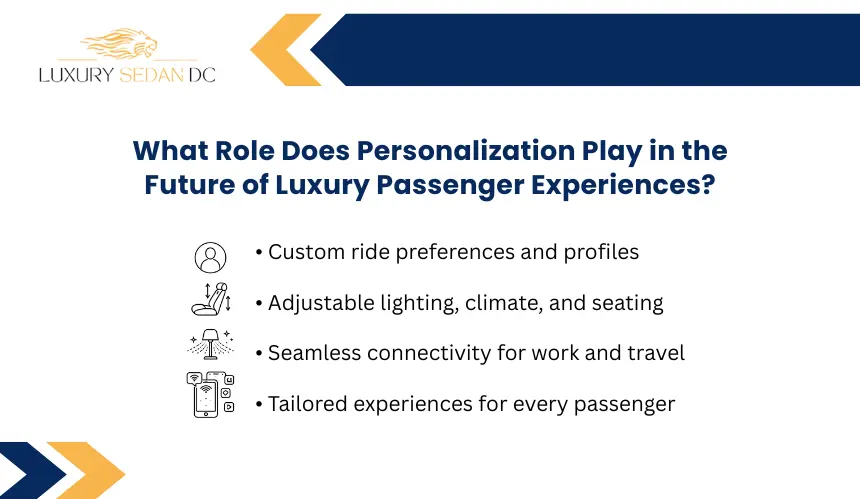
Personalization is becoming one of the defining features of modern luxury ground transportation. Premium travelers increasingly expect transportation services to adapt to their individual preferences, comfort needs, and travel habits. Instead of offering a one-size-fits-all ride experience, luxury mobility providers are focusing on customized passenger environments that deliver greater comfort, convenience, and productivity.
Advances in digital platforms, passenger data systems, and smart vehicle technologies now allow transportation companies to tailor services based on each traveler’s preferences.
Personalized Ride Preferences and Digital Passenger Profiles
Many luxury transportation providers are introducing digital passenger profiles that store individual travel preferences. These profiles allow companies to deliver consistent service experiences for returning clients by remembering details such as seating preferences, preferred vehicle types, or communication styles.
Passenger preference systems may include:
- preferred vehicle models or seating arrangements
- temperature and climate control preferences
- preferred routes or travel schedules
- music or entertainment selections
By storing these preferences, transportation providers can automatically adjust services to match the passenger’s expectations.
Did You Know?
Customer experience studies show that personalized service experiences can significantly increase customer satisfaction and loyalty, especially in premium service industries.
Adaptive Cabin Environments and Smart Comfort Features
Luxury vehicles are increasingly equipped with adaptive cabin technologies that allow passengers to customize their ride environment. These systems enable adjustments to lighting, seating, and climate settings, creating a comfortable atmosphere tailored to each passenger’s preferences.
Common adaptive comfort features include:
- adjustable ambient lighting
- climate zones for individual seating areas
- ergonomic seating adjustments
- noise reduction technologies
These features help create a calm and relaxing environment that enhances the overall travel experience.
Did You Know?
Many luxury vehicles now use advanced noise insulation technologies that significantly reduce cabin noise, allowing passengers to relax or work comfortably during travel.
Entertainment, Connectivity, and Business Productivity Features
For many business travelers, transportation is not only about reaching a destination but also about maintaining productivity while in transit. Modern luxury vehicles often include digital connectivity systems that allow passengers to stay connected with their work.
These in-vehicle technologies may support:
- onboard Wi-Fi connectivity
- device charging stations
- integrated multimedia systems
- workspace-friendly seating layouts
Such features allow passengers to review documents, respond to messages, or prepare for meetings while traveling.
Did You Know?
Many executives consider transportation time an opportunity for productivity, using travel periods to review materials, communicate with teams, or prepare for important meetings.
As personalization technologies continue to advance, luxury transportation providers are increasingly able to create highly customized travel experiences that meet the specific preferences and expectations of each passenger.
Are Subscription-Based Mobility Models Changing Luxury Transportation?
Subscription-based mobility is emerging as a new model within luxury ground transportation, offering travelers flexible access to premium transportation without the responsibilities associated with vehicle ownership. Instead of booking individual rides each time transportation is needed, some providers now offer membership-style services that allow passengers to access chauffeur-driven vehicles or luxury fleets through monthly or annual plans.
This approach reflects a broader shift in the mobility industry, where convenience and flexibility are becoming more important than traditional ownership models.
Monthly Luxury Mobility Membership Programs
Luxury mobility subscription programs typically provide members with access to a range of premium vehicles and professional drivers for a fixed monthly fee. Depending on the service provider, these programs may include a certain number of rides, hours of chauffeur service, or flexible travel options throughout the month.
Membership-based mobility programs may include benefits such as:
- guaranteed vehicle availability for scheduled trips
- access to multiple vehicle types within a luxury fleet
- priority booking for frequent travelers
- simplified billing through monthly payment plans
These programs are particularly appealing for professionals or frequent travelers who rely on consistent transportation services.
Did You Know?
Mobility subscription services have gained popularity in recent years as consumers increasingly prefer flexible transportation access rather than long-term vehicle ownership commitments.
Corporate Transportation Subscription Plans
Businesses are also adopting subscription-style transportation programs to support executive mobility and corporate travel logistics. Companies that regularly transport executives, clients, or visiting partners often benefit from predictable transportation arrangements and simplified billing structures.
Corporate transportation subscriptions can help organizations:
- coordinate executive travel efficiently
- manage transportation budgets through fixed monthly costs
- ensure consistent service standards for business guests
- simplify travel planning for corporate teams
These programs allow companies to maintain reliable transportation without managing their own fleet of vehicles.
Did You Know?
Many corporate travel programs now include managed transportation services, which allow companies to centralize travel logistics and maintain consistent service quality.
Flexible Mobility Access Instead of Vehicle Ownership
One of the major advantages of subscription-based mobility is the ability to access luxury transportation when needed without maintaining a personal vehicle. High-end mobility services are increasingly positioned as an alternative to traditional luxury car ownership, particularly in large cities where parking, traffic congestion, and maintenance costs can be significant.
Subscription mobility models allow users to:
- request transportation on demand or schedule rides in advance
- switch between different vehicle types depending on travel needs
- avoid maintenance, insurance, and parking responsibilities
- access professional drivers when required
Did You Know?
Urban mobility studies show that younger professionals and frequent travelers are increasingly interested in access-based transportation models, where services replace traditional ownership.
As subscription mobility programs continue to develop, they are expected to play a growing role in the future of luxury transportation by offering flexible and convenient access to premium mobility services.
How Is Sustainability Influencing the Design of Luxury Transportation?
Sustainability has become an increasingly important factor in the evolution of luxury ground transportation. As environmental awareness grows among travelers and businesses, many transportation providers are adopting eco-conscious practices while maintaining the comfort and sophistication associated with premium mobility services. This shift has encouraged the development of greener vehicle technologies, environmentally responsible fleet strategies, and eco-luxury design innovations.
Luxury transportation providers are now working to balance environmental responsibility with the high standards of comfort, performance, and service expected by premium travelers.
Eco-Conscious Vehicle Design and Materials
Luxury vehicle manufacturers are incorporating sustainable design elements into modern vehicle interiors and components. These innovations include the use of responsibly sourced materials, lightweight construction methods, and energy-efficient systems that reduce environmental impact while maintaining a refined passenger environment.
Eco-luxury design may involve:
- sustainable interior materials such as responsibly sourced wood or recycled fabrics
- lightweight components that improve energy efficiency
- energy-efficient climate control systems
- advanced battery technology for electric vehicles
These design innovations allow luxury transportation to maintain premium aesthetics while reducing environmental impact.
Did You Know?
Many automotive manufacturers are investing heavily in sustainable materials, with eco-friendly interior components becoming more common in modern luxury vehicles.
Carbon-Neutral Transportation Initiatives
Some transportation providers are implementing carbon-neutral programs to reduce their overall environmental footprint. These initiatives may include adopting electric or hybrid vehicles, investing in renewable energy sources, or supporting environmental offset programs that balance emissions generated during transportation operations.
Carbon-neutral mobility strategies may include:
- transitioning fleet vehicles to electric or hybrid powertrains
- investing in renewable energy charging infrastructure
- participating in carbon offset initiatives
- optimizing routes to reduce fuel consumption
These programs allow transportation companies to align their services with broader environmental goals while maintaining high service standards.
Did You Know?
Environmental mobility initiatives have gained traction in recent years, with many transportation companies exploring ways to reduce fleet emissions through electrification and efficiency improvements.
Green Fleet Management Strategies
Sustainability in luxury transportation also involves optimizing fleet operations to minimize environmental impact. Advanced fleet management systems allow transportation providers to monitor vehicle performance, fuel efficiency, and trip patterns in real time. By analyzing this data, companies can reduce unnecessary mileage and improve operational efficiency.
Green fleet strategies may involve:
- optimizing vehicle routes to reduce travel distances
- scheduling preventive maintenance to improve fuel efficiency
- integrating electric vehicles into transportation fleets
- monitoring energy consumption across the fleet
Did You Know?
Fleet optimization technologies can reduce fuel consumption and operational emissions by improving route efficiency and vehicle performance monitoring.
As environmental priorities continue to influence mobility industries, sustainability initiatives are becoming an integral part of the future of luxury transportation. Premium mobility providers are increasingly combining eco-friendly innovations with high-end design to create environmentally responsible luxury travel experiences.
How Are Chauffeur Services Evolving for the Next Generation of Luxury Travel?
Professional chauffeur services remain a core element of luxury ground transportation, but the role of the chauffeur is evolving alongside new technologies and changing passenger expectations. Modern premium transportation services are moving beyond basic driving responsibilities toward a more refined service model that combines professionalism, hospitality, safety awareness, and personalized assistance.
In the future of luxury mobility, chauffeurs are expected to function not only as drivers but also as travel coordinators who help ensure that every stage of the passenger journey runs smoothly.
Advanced Driver Training and Professional Standards
Luxury transportation providers are increasingly investing in advanced driver training programs to maintain high service standards. These training programs often focus on safety, professionalism, and customer interaction to ensure that chauffeurs deliver a consistent and refined passenger experience.
Modern chauffeur training may include:
- defensive driving and road safety techniques
- advanced navigation and route planning skills
- professional communication with passengers
- etiquette and hospitality training
These skills help chauffeurs create a travel experience that reflects the expectations associated with premium transportation services.
Did You Know?
Many professional chauffeur training programs now include customer service and hospitality components, recognizing that passenger interaction is a critical part of the luxury travel experience.
Concierge-Level Passenger Services
Luxury transportation services are increasingly incorporating concierge-style assistance to provide passengers with a more personalized and convenient experience. Chauffeurs may assist with travel coordination, luggage handling, and other details that contribute to a seamless journey.
Concierge-level service can include:
- coordinating pickup locations and travel schedules
- assisting passengers with luggage or personal items
- ensuring smooth arrival at hotels, offices, or event venues
- maintaining a comfortable and professional travel environment
This level of service helps elevate luxury transportation from simple mobility to a more comprehensive travel experience.
Did You Know?
High-end hospitality industries often integrate transportation services with concierge assistance, allowing travelers to enjoy seamless travel coordination between transportation, hotels, and events.
Enhanced Security and Privacy Features
Privacy and security are becoming increasingly important considerations for luxury transportation clients. Business executives, public figures, and high-net-worth individuals often require transportation environments that provide discretion and safety.
Modern luxury transportation services may implement security features such as:
- professionally vetted and background-checked drivers
- discreet and confidential passenger handling
- secure communication between dispatch teams and drivers
- vehicles equipped with advanced safety technologies
Did You Know?
Many premium transportation providers follow strict security protocols to ensure passenger confidentiality and safety, particularly when transporting corporate executives or high-profile clients.
As passenger expectations continue to evolve, chauffeur services are adapting by combining professional driving expertise with hospitality-focused service standards and enhanced security practices. This transformation is helping redefine the role of chauffeurs within the future of luxury ground transportation.
Could Air Mobility Become Part of Future Luxury Transportation?
One of the most innovative developments in modern mobility is the emergence of urban air mobility solutions. While luxury ground transportation will continue to play a major role in premium travel, new aviation technologies are beginning to introduce the possibility of short-distance air transport within cities and between nearby urban centers. These developments could eventually complement ground-based luxury transportation services by providing faster travel options for high-end passengers.
Urban air mobility concepts are still evolving, but they represent an exciting direction for the future of premium transportation.
Urban Air Mobility and Electric Vertical Aircraft
Urban air mobility refers to the use of small aircraft designed for short-distance travel within or between cities. Many technology companies and aviation manufacturers are developing electric vertical takeoff and landing (eVTOL) aircraft capable of operating in urban environments.
These aircraft are designed to:
- take off and land vertically like helicopters
- operate quietly using electric propulsion systems
- travel shorter distances efficiently
- reduce travel time between congested urban areas
If these systems become widely available, they could significantly change how high-end travelers move between airports, business districts, and surrounding regions.
Did You Know?
Several aerospace companies are actively testing electric vertical takeoff and landing aircraft, which are designed to support future urban air mobility networks.
Airport-to-City Air Transfer Concepts
One potential application of urban air mobility is the ability to provide direct transfers between airports and city centers. In large metropolitan areas where traffic congestion can significantly delay ground transportation, short air transfers could offer faster travel options for passengers with tight schedules.
Luxury travelers might eventually use air mobility services to:
- travel between airports and city business districts
- move quickly between nearby cities
- connect directly to major transportation hubs
Ground-based luxury transportation services would likely continue to play an important role in transporting passengers between airports, vertiports, hotels, and offices.
Did You Know?
Urban mobility research suggests that short-distance air transportation could help reduce travel times in highly congested metropolitan areas.
Integration Between Ground Luxury Transport and Air Mobility
If urban air mobility systems become operational in the future, they will likely be integrated with ground transportation services to create seamless travel experiences. Luxury ground transportation providers could play a key role in connecting passengers between air mobility hubs and their final destinations.
This integration may involve:
- Coordinating ground transportation to vertiport locations
- Synchronizing flight schedules with chauffeur pickups
- Providing seamless transfers between air and ground mobility systems
Did You Know?
Transportation experts often describe future mobility systems as multi-modal networks, where different transportation methods, such as ground vehicles, trains, and air mobility, work together to provide efficient travel options.
While still in early development, urban air mobility has the potential to complement luxury ground transportation and expand the possibilities for premium travel in the future.
What Will the Future of Luxury Ground Transportation Look Like?
The future of luxury ground transportation will likely be defined by a combination of advanced technology, sustainable vehicle innovations, and increasingly personalized travel experiences. As transportation systems continue to evolve, premium mobility services are expected to become more connected, efficient, and integrated with broader travel ecosystems. Rather than focusing solely on high-end vehicles, future luxury transportation will emphasize intelligent mobility solutions that deliver comfort, reliability, and seamless travel coordination.
Several emerging developments suggest how luxury transportation may continue to evolve in the coming years.
AI-Driven Mobility Ecosystems
Artificial intelligence is expected to play a growing role in transportation planning and coordination. AI-powered platforms can analyze large volumes of travel data, including traffic patterns, passenger demand, and fleet availability, to improve trip scheduling and route optimization.
In luxury transportation services, AI-driven systems may support:
- Automated vehicle dispatch and driver assignments
- Predictive traffic analysis for route planning
- Personalized travel recommendations based on passenger preferences
- Improved fleet utilization during peak travel periods
These intelligent systems help transportation providers deliver faster, more reliable services while reducing operational inefficiencies.
Did You Know?
AI-powered mobility platforms are increasingly used in transportation systems to analyze real-time data and optimize travel routes, helping reduce delays and improve scheduling efficiency.
Integrated Smart City Transportation Networks
Luxury transportation services are also expected to become more connected with broader urban mobility systems. As cities adopt smart transportation infrastructure, mobility providers may integrate their services with public transit networks, airport systems, and digital travel platforms.
Smart city integration may include:
- real-time coordination with traffic management systems
- integration with airport scheduling platforms
- connectivity with hotel and corporate travel systems
- collaboration with other mobility services
These connected transportation networks can create more efficient travel experiences for passengers by reducing delays and improving coordination between different travel modes.
Did You Know?
Many cities around the world are investing in smart mobility infrastructure, which uses digital technologies to improve traffic management and transportation coordination.
Expanding Global Demand for Premium Mobility
Demand for premium transportation services is expected to grow as global business travel, tourism, and urban mobility continue to expand. Professionals, executives, and high-end travelers increasingly value transportation services that offer reliability, privacy, and personalized travel experiences.
Future growth in luxury transportation may be influenced by:
- increasing global business travel
- rising demand for executive transportation services
- expanding urban populations and mobility needs
- greater emphasis on personalized travel experiences
Did You Know?
Mobility industry studies indicate that premium travel services are experiencing steady growth, driven by demand for convenience, comfort, and efficient transportation solutions.
As these trends continue to develop, luxury ground transportation is likely to become a more technologically advanced and highly personalized mobility solution that supports the evolving needs of modern travelers.
Frequently Asked Questions
What is luxury ground transportation?
Luxury ground transportation refers to premium travel services that provide high-end vehicles, professional chauffeurs, and enhanced passenger experiences. These services often include executive sedans, luxury SUVs, and personalized travel coordination designed for business travelers, executives, and clients who prioritize comfort, reliability, and privacy during their journeys.
How is technology changing luxury transportation services?
Technology is transforming luxury transportation through digital booking platforms, real-time trip tracking, intelligent dispatch systems, and connected vehicle technologies. These innovations allow transportation providers to coordinate trips more efficiently, improve route planning, and deliver personalized passenger experiences with greater reliability.
Are electric vehicles becoming common in luxury transportation fleets?
Yes, electric vehicles are increasingly being integrated into luxury transportation fleets. Many premium transportation providers are adopting electric luxury sedans and SUVs because they offer quiet operation, smooth performance, and lower environmental impact while maintaining the comfort and sophistication expected in luxury travel services.
What makes luxury transportation different from standard car services?
Luxury transportation services typically focus on higher service standards, premium vehicle quality, and enhanced passenger comfort. Features such as professional chauffeur training, personalized travel preferences, advanced vehicle technologies, and concierge-style service help distinguish luxury mobility services from standard transportation options.
What innovations may shape the future of chauffeur services?
Several innovations are expected to shape the future of chauffeur services, including electric luxury fleets, connected smart vehicle technologies, AI-powered dispatch systems, personalized passenger environments, and potential integration with emerging urban air mobility solutions. These advancements aim to improve efficiency, sustainability, and overall passenger experience.