

- luxurysedandc
What Factors Influence the Cost of Premium Car Services?
Quick Answer: Premium car service costs are influenced by vehicle type, trip structure (hourly vs point-to-point), total driver time, distance, traffic conditions, commercial insurance requirements, and additional fees such as waiting time, tolls, parking, and airport charges. Pricing reflects not only the vehicle but the level of service, regulatory compliance, and operational reliability built into the experience. |
At first glance, premium car services often appear significantly more expensive than standard ride options. However, many travelers are surprised when quotes vary widely for what seems like a similar trip. A short airport transfer may cost far less than an hourly booking. The same vehicle category may have different rates at different times of day. Even distance alone does not always determine the final price.
This variation leads to confusion. Is the higher price simply for luxury branding, or are there structural cost factors behind it? Understanding what influences the cost of premium car services requires looking beyond the vehicle itself. Pricing is shaped by time allocation, operational standards, insurance requirements, scheduling logistics, and service inclusions.
When these components are clearly broken down, the pricing structure becomes more transparent and easier to evaluate.
What Are the Three Main Pricing Models Used by Premium Car Services in Centreville?
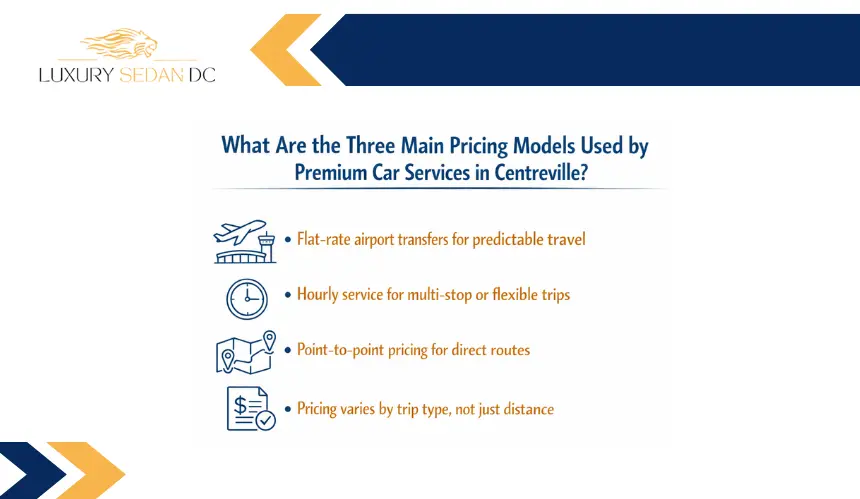
Premium car services in Centreville and nearby areas, such as Clifton, Chantilly, Fair Lakes, and Fairfax, typically use three pricing models: Flat-Rate Airport Transfers, Hourly Chauffeur Service, and Point-to-Point Executive Service.
Each model is designed for a specific type of trip and operational structure. Understanding which model applies helps explain why pricing varies even between similar routes.
Flat-Rate Airport Transfer Pricing
Flat-rate airport transfers are commonly used for transportation to and from Washington Dulles International Airport. This model provides a predetermined price for a defined pickup and drop-off zone.
Airport routes are high-frequency and predictable in distance, but travel time can vary due to congestion on I-66, Route 28, or Route 50. Instead of billing strictly by the minute, providers calculate an averaged route structure that accounts for typical traffic exposure and driver allocation.
Flat-rate pricing offers travelers predictability and reduces fare volatility caused by traffic fluctuations.
Hourly Chauffeur Service Pricing
Hourly pricing is used when a client requires the vehicle and driver for a reserved time block rather than a single destination trip. This model typically includes a minimum booking window because the vehicle and chauffeur are dedicated exclusively to that reservation.
Hourly executive car service is commonly used for:
- Multi-stop business meetings
- Event transportation
- Wedding logistics
- Flexible itineraries across Northern Virginia
The minimum booking requirement reflects driver scheduling and availability. Once reserved, that time cannot be reassigned to other clients.
Point-to-Point Executive Service Pricing
Point-to-point pricing applies to single, direct trips within Centreville or surrounding communities such as Fairfax or Clifton. This model calculates cost based on:
- Distance
- Estimated travel time
- Local congestion patterns
- Service inclusions
Although shorter trips may appear more expensive per mile, pricing reflects structured driver availability, commercial insurance coverage, and operational readiness rather than fuel consumption alone.
Why Location Directly Influences Premium Car Service Cost
Location matters because it affects driver positioning, traffic exposure, and scheduling density.
For example:
- Trips originating near high-traffic corridors, such as Route 29, may require additional buffer time.
- Early-morning airport departures may require pre-dawn driver dispatch.
- Event transportation in Fairfax during peak wedding season may increase demand concentration.
In Centreville and surrounding communities, pricing reflects real-world operational conditions rather than a flat per-mile formula.
Premium car services are priced around managed time, structured reliability, and regulatory standards. Understanding these models clarifies why two similar trips can produce different quotes and why cost is tied to service architecture rather than appearance alone.
1. How Does Vehicle Type Affect the Cost of Premium Car Services in Centreville?
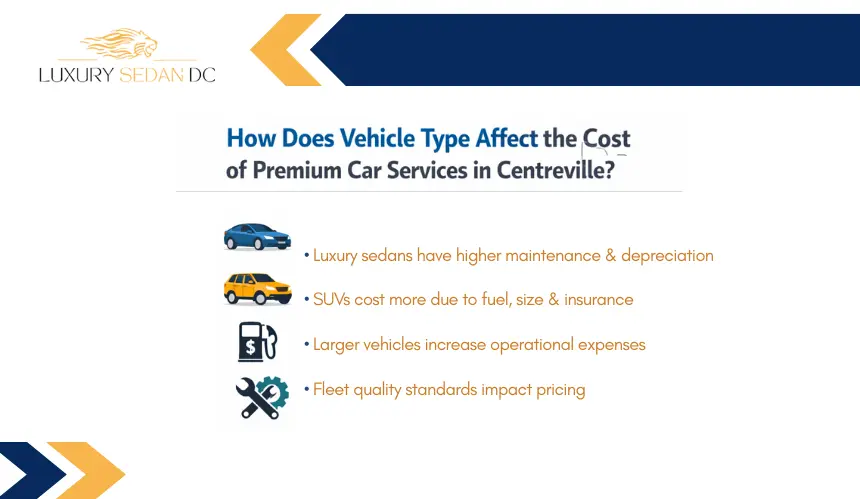
Vehicle category is one of the most direct pricing factors in premium car services. Whether the booking is for an executive sedan, a luxury SUV, or a larger group vehicle, the base rate reflects acquisition costs, maintenance standards, fuel consumption, and fleet positioning.
In Centreville and surrounding areas, such as Chantilly and Fairfax, demand varies by trip type. Airport transfers often use executive sedans, while corporate groups and family travel may require SUVs or larger vehicles.
Why Do Luxury Sedans Cost More Than Standard Vehicles?
Premium sedans used in executive car service fleets are typically late-model vehicles with advanced safety systems, higher interior standards, and enhanced ride comfort. These vehicles:
- Depreciate at a higher annual rate than standard fleet vehicles
- Require premium maintenance components
- Are maintained to strict cleanliness and presentation standards
Did You Know?
Automotive cost analyses consistently show that depreciation is the largest ownership expense category for newer luxury vehicles. This directly influences base pricing in premium transportation fleets.
Because premium car services operate commercially, vehicles are also replaced more frequently to maintain reliability and brand standards. Higher turnover increases operating costs, which in turn affect rates.
How Do SUVs and Larger Vehicles Influence Pricing?
Luxury SUVs and executive transport vehicles generally carry higher base rates than sedans. The reasons include:
- Greater fuel consumption
- Higher tire and maintenance costs
- Larger insurance exposure
- Increased purchase price
In areas like Fair Lakes and Clifton, where families or business groups may travel together, SUVs provide capacity and comfort, but that expanded utility raises operational overhead.
Did You Know?
Commercial auto insurance premiums are often calculated based on vehicle class and liability exposure. Larger passenger transport vehicles may require higher coverage than personal-use vehicles.
Does Fleet Standardization Affect Cost?
Premium car services often maintain standardized fleets to ensure consistency in performance, presentation, and passenger experience. Routine inspections, scheduled preventive maintenance, and professional detailing add ongoing operational costs.
Fleet management research shows that preventive maintenance programs reduce unexpected downtime and improve service reliability. While this improves customer experience, it also adds to the overall service pricing structure.
2. How Do Time and Scheduling Rules Influence Premium Car Service Pricing in Centreville?
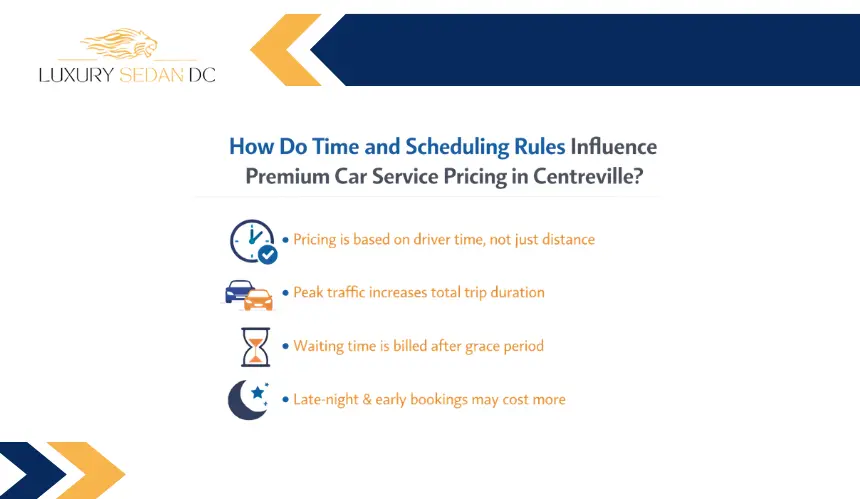
In premium car services, time is often a more significant pricing factor than distance. Unlike standard ride models that rely heavily on mileage, executive and black car services price around driver allocation, scheduling structure, and availability windows.
In Centreville and nearby areas such as Chantilly and Fairfax, traffic variability and peak commuting patterns directly affect how time is calculated into a quote.
Why Does Driver Time Matter More Than Distance?
When a professional chauffeur is assigned to a booking, that time block is reserved exclusively for the client. Even if a trip covers a short distance, the driver’s availability during that period cannot be reassigned.
For example, a 12-mile airport transfer during peak I-66 congestion may take significantly longer than the same trip during off-peak hours. Because billing reflects scheduled driver hours, travel time variability influences pricing more than mileage alone.
Did You Know?
Urban congestion data consistently shows that peak-hour commute times can increase by 20 to 40 percent compared to free-flow traffic conditions. Time-based pricing models account for this variability to maintain schedule reliability.
What Is Waiting Time and How Is It Calculated?
Waiting time applies when a driver remains on-site beyond the included grace period. This commonly occurs during:
- Airport arrivals with delayed passengers
- Event pickups with extended departures
- Multi-stop itineraries
Premium services typically include a limited complimentary wait window, especially for airport pickups. Beyond that threshold, time is billed incrementally because the driver remains reserved and unavailable for other assignments.
Why Do Late-Night or Early-Morning Bookings Cost More?
Trips scheduled during very early morning or late-night hours may carry adjusted rates. This reflects labor allocation and availability constraints.
Premium services operating in Centreville and the surrounding Northern Virginia areas must ensure driver coverage outside standard hours. Maintaining 24-hour availability requires staffing and dispatch coordination, which influences operational costs.
Did You Know?
Transportation service industries that operate outside traditional business hours often incur higher labor costs due to staffing requirements and shift-based scheduling structures.
How Do Peak Seasons and Special Events Affect Pricing?
Demand concentration influences availability. During high-demand periods, such as wedding season in Fairfax County or peak travel periods at airports, vehicle allocation tightens. Limited fleet availability during peak demand periods can influence the rate structure.
Time allocation remains the central pricing driver. In premium car services, cost reflects not only distance traveled but the structured availability of a professionally licensed driver within a defined scheduling window.
3. What Additional Fees Commonly Affect the Final Cost of Premium Car Services in Centreville?
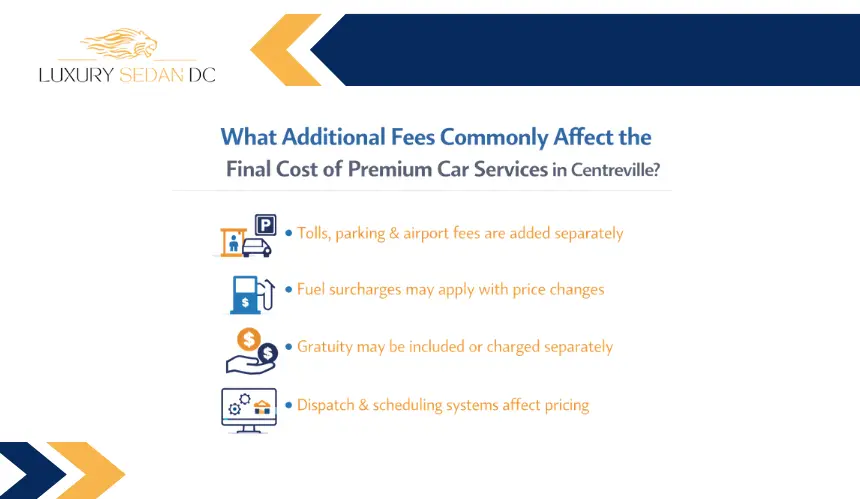
Beyond the base rate and time structure, several supplemental charges can influence the final invoice for premium car services. These are not arbitrary add-ons. Most reflect pass-through expenses or operational requirements tied to regulated transportation.
In Centreville and surrounding areas such as Fairfax and Chantilly, understanding these components helps prevent confusion when reviewing a quote.
How Are Tolls, Parking, and Airport Fees Handled?
Certain costs are location-specific and unavoidable. For example:
- Toll roads along Route 267 toward Washington Dulles International Airport
- Parking garage fees during event pickups
- Airport access or concession fees
These charges are typically passed directly to the client because they are incurred in real time during service delivery.
Did You Know?
Airport transportation providers often pay concession or access fees to operate legally within airport pickup zones. These fees are regulated and can influence transfer pricing.
What Is a Fuel Surcharge and Why Is It Applied?
Fuel surcharges are occasionally applied when market fuel prices fluctuate significantly. Rather than constantly adjusting base rates, some providers apply a transparent percentage adjustment tied to shifts in operating costs.
Fuel represents one of the primary variable expenses in fleet operations. Larger vehicles such as executive SUVs may amplify this impact.
Is Gratuity Included in the Price?
Premium car services may either include a service fee or list gratuity separately. This varies by provider. It is important to confirm whether:
- Gratuity is built into the quoted rate
- A fixed service percentage is applied
- Tipping remains optional
Clarity here prevents misinterpretation of the final total.
Why Do Administrative and Dispatch Costs Matter?
Premium services operate structured dispatch systems that manage:
- Scheduling logistics
- Real-time driver coordination
- Flight tracking for airport arrivals
- Route optimization
These backend systems support reliability. While they are not line-item fees, they contribute to the overall pricing structure.
Did You Know?
Fleet dispatch and routing software significantly reduces missed pickups and scheduling conflicts. Technology integration adds operational cost but improves service precision.
4. How Do Commercial Insurance and Regulatory Requirements Impact Premium Car Service Costs in Centreville?
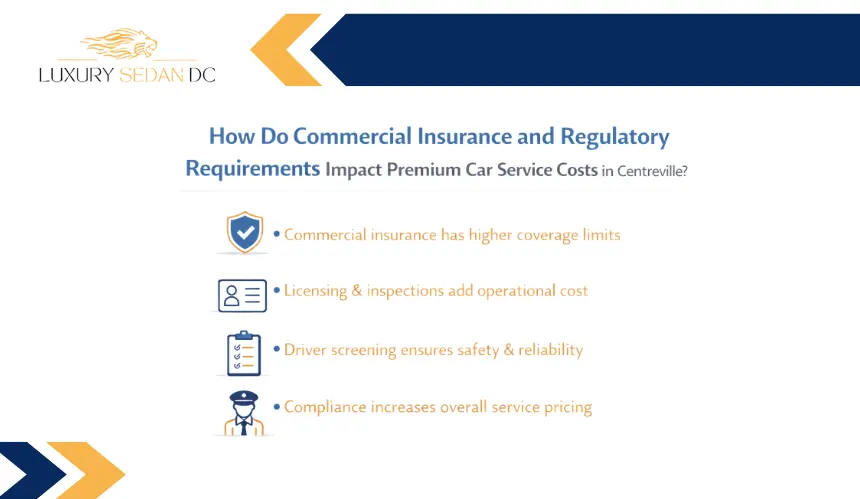
One of the most overlooked cost drivers in premium car services is commercial insurance and regulatory compliance. Unlike personal vehicles or informal transportation options, executive and black car services operate under structured legal and insurance frameworks designed for passenger transport.
In Centreville and nearby areas such as Fairfax and Chantilly, providers must meet state and local transportation standards. These requirements directly influence operational expenses.
Why Is Commercial Auto Insurance More Expensive?
Premium car services carry commercial auto insurance policies rather than personal coverage. These policies are structured for higher liability exposure because they transport paying passengers.
Commercial transportation insurance typically includes:
- Higher liability coverage limits
- Passenger protection requirements
- Coverage for hired or employed drivers
- Business-use endorsements
Did You Know?
Commercial passenger transportation policies often carry significantly higher liability limits than standard personal auto insurance. Higher coverage thresholds are designed to protect both passengers and third parties, but they also increase operators’ annual premium costs.
These elevated insurance expenses are built into service pricing to maintain compliance and protect clients.
How Do Licensing and Compliance Requirements Add to Cost?
Operating a premium car service involves more than owning a vehicle. Providers must comply with:
- Business transportation licensing
- Periodic vehicle inspections
- Driver qualification verification
- Record-keeping and regulatory audits
These compliance measures ensure legal operation and passenger safety.
Why Does Professional Driver Screening Influence Pricing?
Premium car services invest in hiring and retaining trained drivers. Screening processes may include background checks, verification of driving history, and adherence to professional conduct standards.
Maintaining a pool of trained drivers reduces liability risk and improves service reliability. However, professional recruitment and retention increase labor costs compared to informal transportation models.
5. How Can Clients Optimize the Cost of Premium Car Services in Centreville?
While premium car services are structured around professional standards and regulated operations, clients can make informed booking decisions that help manage overall cost without reducing service quality.
In Centreville and nearby areas such as Chantilly and Fairfax, small adjustments to the booking structure and trip planning can affect the final rate.
Does Choosing the Right Pricing Model Reduce Cost?
Selecting the appropriate pricing structure is important. For single, direct trips, point-to-point pricing is often more economical than hourly vehicle reservations. Hourly bookings are better suited for multi-stop itineraries or extended availability.
Matching the pricing model to the trip purpose prevents paying for unused driver time.
Can Booking During Off-Peak Hours Help?
Travel scheduled outside heavy congestion periods may reduce total billed time under hourly structures. Early planning also improves vehicle availability and reduces last-minute premium adjustments during high-demand periods.
Should Clients Confirm What Is Included in the Quote?
Requesting clarity on inclusions helps prevent surprises. Important confirmations include:
- Waiting time allowances
- Gratuity structure
- Toll and parking handling
- Airport access fees
Transparent quotes allow accurate cost comparison across providers.
Does Vehicle Selection Influence Budget Control?
Choosing a sedan instead of a larger SUV for individual travel can reduce base rate expenses. Vehicle class should align with passenger count and luggage requirements rather than defaulting to larger categories.
Frequently Asked Questions
What is typically included in the base price of a premium car service?
The base price usually covers the vehicle, professional chauffeur, commercial insurance, and standard point-to-point transportation within a defined service area. However, waiting time, tolls, parking, airport fees, or gratuity may be itemized separately depending on the provider’s pricing structure.
Why can two similar trips in Centreville have different prices?
Pricing differences often result from variations in time of day, traffic exposure, vehicle type, and trip structure. An early-morning airport transfer, an hourly reservation, or a larger vehicle request can change the total rate, even if the pickup and drop-off locations are similar.
Are airport transfers usually cheaper than hourly bookings?
Airport transfers are often quoted at flat rates, which can be more cost-efficient for direct trips. Hourly bookings are typically better suited for multiple stops, extended availability, or event transportation where flexibility is required throughout the reservation window.
Do premium car services charge for waiting time?
Most providers include a limited grace period, particularly for airport pickups. Additional waiting time beyond the included window is typically billed incrementally because the driver remains reserved and unavailable for other assignments during that period.
Is gratuity mandatory for premium car services?
Some providers include a service fee within the quoted rate, while others list gratuity separately. It is important to confirm how gratuity is structured in the quote to understand the full expected total.
Does traffic in areas like Fairfax or Chantilly affect the final cost?
Traffic conditions can influence billed time under hourly pricing models. Congestion along major corridors near Centreville, especially during peak commuting hours, may affect scheduling duration and overall trip allocation.