

- luxurysedandc
What Role Does Customer Experience Play in Modern Transportation Services?
Quick Answer: Customer experience plays a critical role in modern transportation services because it influences passenger satisfaction, service reliability, and long-term customer loyalty. Today’s travelers expect more than basic transportation; they look for punctual pickups, professional drivers, comfortable vehicles, transparent pricing, and smooth communication throughout the journey. These elements shape the overall customer experience in transportation services and often determine whether passengers choose the same provider again. In the modern transportation industry, customer experience also extends beyond the ride itself. It includes the entire passenger journey, from the booking process and pre-trip communication to the ride environment and post-trip support. Transportation companies that focus on improving service quality, convenience, and reliability are more likely to build trust with passengers and remain competitive in an increasingly experience-driven mobility market. |
Transportation services were once judged mainly by one simple factor: whether they could take passengers from one place to another. Today, that expectation has changed significantly. Travelers now evaluate transportation providers based on the entire journey experience, including how easy it is to book a ride, how punctual the service is, how comfortable the vehicle feels, and how professionally drivers interact with passengers. These factors collectively shape the customer experience in transportation services, which has become a key differentiator in a highly competitive mobility market.
As more transportation options become available, from rideshare platforms to professional chauffeur services, passengers have greater freedom to choose providers that deliver convenience, reliability, and consistent service quality. For many travelers, especially those managing tight schedules or unfamiliar destinations, a smooth and well-organized transportation experience can make a significant difference in reducing travel stress. Understanding the role of customer experience in modern transportation helps explain why companies now focus heavily on service standards, communication, and passenger satisfaction throughout every stage of the travel journey.
Understanding Customer Experience in the Transportation Industry
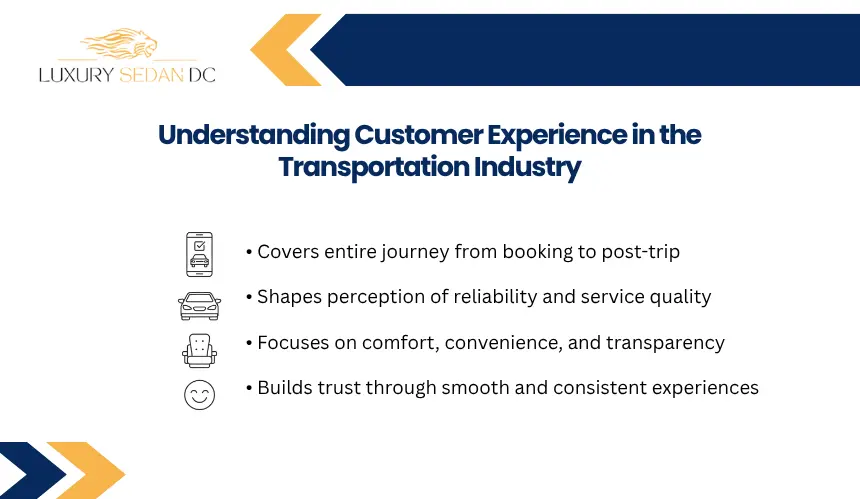
Customer experience (CX) in transportation refers to the overall impression passengers form during every interaction with a transportation provider. This experience begins before the trip is booked and continues through pickup, the ride itself, and even post-trip communication. In modern mobility services, CX has become a critical factor that influences how passengers evaluate reliability, professionalism, and overall service quality.
Unlike traditional transportation models that focused primarily on moving passengers from one location to another, today’s transportation companies must deliver a well-coordinated service experience that prioritizes convenience, transparency, and comfort throughout the passenger journey.
What Customer Experience (CX) Means in Transportation Services
In transportation, CX includes all operational and service elements that shape how passengers perceive a trip. This includes booking convenience, punctual pickups, driver professionalism, vehicle quality, and clear communication during the journey. When these elements work together effectively, passengers experience a smooth and predictable trip that builds trust in the service provider.
Transportation providers typically focus on several CX pillars:
- Reliable scheduling and punctual pickups
- Professional driver conduct and communication
- Clean, comfortable, and well-maintained vehicles
- Transparent pricing and booking processes
- Clear trip coordination and customer support
When these factors are consistently delivered, they create a dependable service experience that encourages repeat bookings and long-term customer relationships.
Did You Know?
Customer experience research across service industries shows that more than 80% of customers consider experience quality to be as important as the product or service itself when choosing a provider.
How the Passenger Journey Shapes Overall Travel Experience
Customer experience in transportation is closely tied to the passenger journey, which represents the full sequence of interactions between a traveler and a transportation provider. Each stage of this journey contributes to how passengers evaluate service quality.
The passenger journey typically includes:
- Booking Stage: Reserving transportation through a website, mobile app, or customer support system.
- Pre-Trip Communication: Receiving confirmations, pickup details, and driver information.
- Pickup Experience: The driver arriving on time and assisting passengers as needed.
- Ride Experience: Vehicle comfort, driving quality, and professionalism during the trip.
- Post-Trip Interaction: Payment processing, receipts, and feedback opportunities.
A seamless journey across these stages improves passenger satisfaction and helps transportation companies maintain consistent service standards.
Did You Know?
Transportation service studies show that punctuality and ride comfort consistently rank among the top factors influencing passenger satisfaction, particularly for airport transfers and corporate travel.
Why Customer Expectations Have Changed in Modern Mobility
Passenger expectations have evolved rapidly due to technological advancements and the growth of digital service platforms. Travelers now expect transportation services to offer the same level of convenience and transparency found in other modern service industries such as hospitality and e-commerce.
Several factors have contributed to rising expectations:
- Widespread use of mobile booking platforms
- Real-time location tracking for vehicles
- Instant digital payment systems
- Easy access to customer reviews and ratings
Because travelers can compare multiple transportation providers instantly, companies must prioritize customer experience to remain competitive.
Did You Know?
According to global mobility industry reports, customer reviews and service ratings now influence transportation booking decisions for a large percentage of travelers, especially when comparing unfamiliar service providers.
Understanding how customer experience functions within the transportation industry helps explain why companies increasingly focus on improving service quality, communication, and operational efficiency across every stage of the passenger journey.
Why Customer Experience Has Become a Competitive Priority
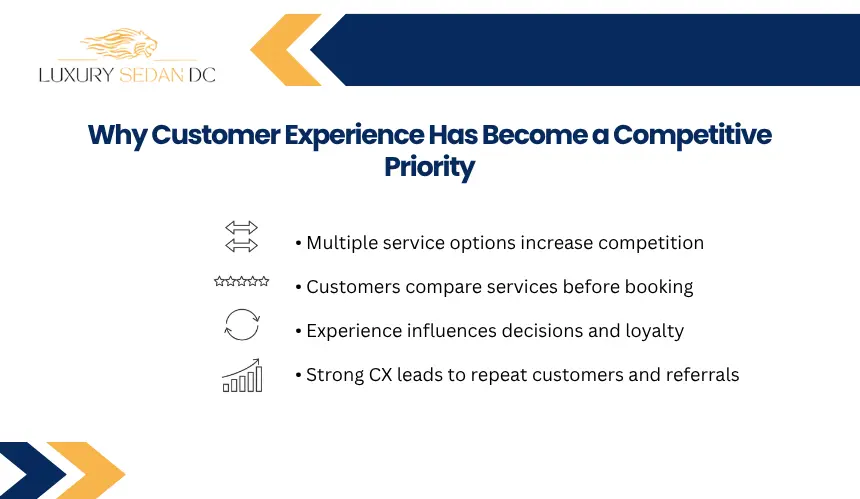
Customer experience has become a defining factor in how transportation companies compete and grow in modern mobility markets. With the expansion of rideshare platforms, professional chauffeur services, and on-demand transportation apps, travelers now have multiple options available for the same journey. Because transportation choices are no longer limited, service providers increasingly rely on delivering a strong customer experience in transportation services to differentiate themselves and retain passengers.
Companies that consistently provide reliable service, professional drivers, and smooth travel coordination are more likely to earn repeat customers and positive public reputation.
Growing Competition in Transportation Services
The transportation industry has evolved significantly in recent years due to the rapid growth of digital mobility platforms and private transportation services. This expansion has created a competitive environment where service quality plays an essential role in attracting and retaining customers.
Passengers now compare transportation providers based on:
- Booking convenience and digital accessibility
- Reliability of pickup times
- Driver professionalism and safety standards
- Vehicle comfort and cleanliness
- Pricing transparency and communication
Because travelers can easily compare services online, transportation companies must consistently deliver positive experiences to remain competitive.
Did You Know?
Global mobility reports indicate that customer experience is now one of the top differentiating factors for transportation companies, particularly in markets where multiple service providers operate in the same region.
Influence of Customer Reviews and Ratings
Online reviews and customer ratings have become powerful indicators of service quality in the transportation industry. Passengers often rely on feedback from previous customers when selecting a transportation provider, especially when booking services in unfamiliar cities.
Reviews typically evaluate several aspects of the passenger experience, including punctuality, driver professionalism, vehicle condition, and overall trip satisfaction.
Positive reviews can significantly strengthen a transportation company’s reputation, while negative feedback may discourage potential customers from choosing the service.
Did You Know?
Consumer behavior research shows that a large percentage of travelers read online reviews before selecting transportation services, particularly for airport transfers and private car services.
How Positive Experiences Build Customer Loyalty
Customer experience directly influences whether passengers choose the same transportation provider again in the future. When travelers have a smooth and reliable experience, such as punctual pickups, courteous drivers, and comfortable vehicles, they are more likely to develop trust in the service provider.
Consistent service quality helps transportation companies build long-term relationships with customers who rely on dependable transportation for business travel, airport transfers, and regular mobility needs.
Loyal customers often contribute to business growth by:
- Booking transportation repeatedly
- Recommending services to colleagues or friends
- Leaving positive reviews online
- Choosing the same provider for future travel
Did You Know?
Customer retention studies across service industries show that improving customer experience can significantly increase repeat bookings, which are often more valuable to businesses than acquiring new customers.
As transportation options continue to expand, companies that prioritize customer experience are better positioned to maintain strong reputations, attract loyal customers, and compete effectively in modern transportation markets.
Key Elements That Shape Customer Experience in Transportation
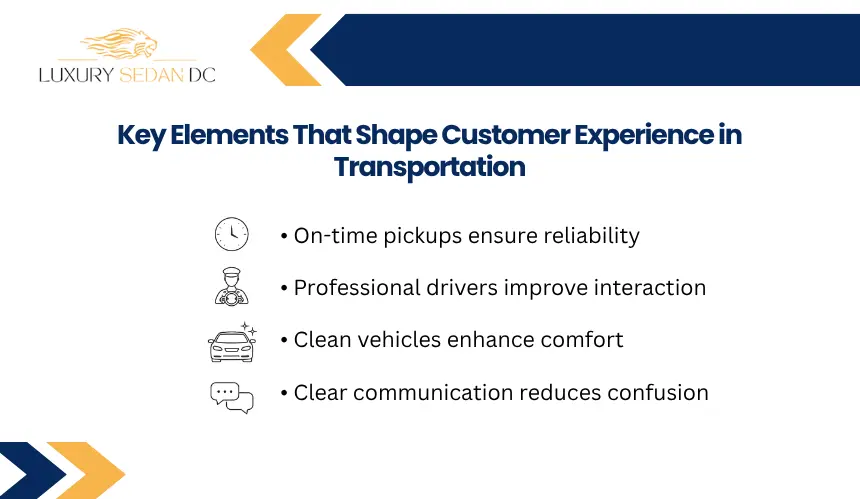
Customer experience in transportation is influenced by several operational and service-related factors that directly affect how passengers perceive a trip. These elements determine whether transportation feels smooth, reliable, and comfortable or stressful and unpredictable. In modern mobility services, transportation providers focus on improving these core service areas to enhance the overall customer experience in transportation services.
By consistently delivering strong performance across these areas, transportation companies can create a dependable and positive travel experience for passengers.
Reliability and Punctual Transportation
Reliability is one of the most important elements shaping transportation customer experience. Passengers often schedule rides around important commitments such as flights, meetings, or events, making punctual transportation essential. A reliable transportation service ensures that vehicles arrive at the scheduled time and that trips are completed efficiently without unnecessary delays.
Transportation providers often rely on route planning tools, traffic monitoring systems, and scheduled dispatch operations to maintain punctual service.
Reliable transportation services typically focus on:
- Accurate pickup scheduling
- Monitoring traffic conditions
- Adjusting routes to avoid delays
- Coordinating drivers based on trip timing
When passengers can depend on consistent and punctual service, it builds trust in the transportation provider.
Did You Know?
Passenger satisfaction surveys frequently rank on-time pickup as one of the most important factors influencing transportation service ratings, particularly for airport transfers and business travel.
Professional Drivers and Passenger Interaction
Driver professionalism plays a central role in shaping the passenger experience. Drivers are often the primary point of interaction between the transportation provider and the passenger, making their conduct and communication critical to overall service perception.
Professional drivers contribute to positive customer experiences by demonstrating:
- Courteous communication with passengers
- Safe and responsible driving practices
- Knowledge of routes and local traffic conditions
- Professional appearance and conduct
These behaviors help create a comfortable and respectful environment for passengers throughout the trip.
Did You Know?
Transportation industry training programs often emphasize defensive driving, passenger communication, and hospitality standards to improve the quality of driver–passenger interactions.
Vehicle Comfort and Cleanliness
The condition of the vehicle also has a significant impact on the passenger experience. Clean, well-maintained vehicles create a sense of comfort and professionalism that enhances the overall quality of a trip.
Passengers typically notice details such as seating comfort, interior cleanliness, temperature control, and ride smoothness during their journey.
Transportation providers often maintain vehicle quality by focusing on:
- Regular cleaning and interior maintenance
- Scheduled mechanical inspections
- Comfortable seating and climate control
- Smooth vehicle performance
A well-maintained vehicle environment contributes to a more relaxing and enjoyable travel experience.
Did You Know?
Customer experience research in the transportation sector shows that vehicle cleanliness and comfort are among the top service factors passengers remember after a trip.
Clear Communication and Service Transparency
Effective communication helps passengers feel informed and confident throughout their transportation experience. Clear communication includes providing accurate booking confirmations, driver details, pickup instructions, and updates if travel conditions change.
Modern transportation services often use digital systems to keep passengers informed during each stage of their trip.
Common communication practices include:
- Trip confirmation messages
- Driver identification and contact information
- Real-time vehicle arrival updates
- Transparent pricing information
These communication practices help eliminate uncertainty and ensure that passengers know what to expect during their journey.
Did You Know?
Many transportation providers now integrate automated communication systems that send real-time trip updates, helping passengers track their rides and stay informed throughout the travel process.
By focusing on reliability, driver professionalism, vehicle quality, and clear communication, transportation providers can significantly improve the overall passenger experience and maintain high service standards.
The Passenger Journey: Where Customer Experience Is Created
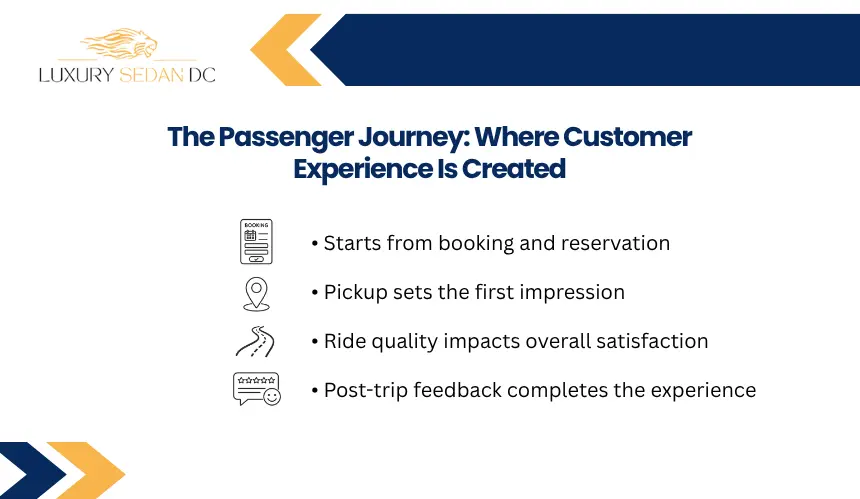
Customer experience in transportation is shaped across multiple stages of the passenger journey rather than during the ride alone. Every interaction a passenger has with a transportation provider, from booking the trip to arriving at the destination, contributes to how the service is perceived. For this reason, companies focusing on customer experience in transportation services often evaluate and improve each stage of the journey to ensure consistency, reliability, and convenience.
A well-managed passenger journey reduces uncertainty, improves travel efficiency, and creates a smoother overall experience.
Booking and Reservation Experience
The customer journey typically begins with the booking process. A simple and efficient reservation system allows passengers to schedule transportation quickly without confusion or unnecessary steps. Travelers increasingly expect booking platforms to be intuitive, transparent, and accessible through both websites and mobile devices.
An effective booking experience usually includes:
- Clear trip selection and scheduling options
- Transparent pricing before confirming the trip
- Instant booking confirmation and trip details
- Secure digital payment options
When the booking process is straightforward, passengers feel more confident about their transportation arrangements.
Did You Know?
Travel technology studies show that user-friendly booking platforms significantly improve customer satisfaction, especially when reservations can be completed within just a few steps.
Pickup Coordination and Arrival Process
The pickup stage is often the moment when passengers form their first direct impression of the transportation service. Punctual arrival, clear pickup instructions, and professional driver conduct help create a positive start to the journey.
Transportation providers typically coordinate pickups by monitoring traffic conditions, confirming pickup locations, and ensuring drivers arrive prepared for the trip.
Key elements that improve pickup coordination include:
- Accurate pickup timing
- Easy communication between passenger and driver
- Assistance with luggage if needed
- Clear identification of the vehicle and driver
A well-organized pickup process helps passengers feel confident that the service is reliable and professionally managed.
Did You Know?
Passenger experience surveys frequently show that pickup punctuality strongly influences how customers rate transportation services, particularly for airport transfers.
Ride Comfort and Travel Environment
Once the journey begins, the ride environment becomes a major contributor to customer experience. Passengers typically expect a smooth ride, comfortable seating, and a calm travel atmosphere that allows them to relax or focus on other activities.
Transportation providers enhance the ride experience by maintaining vehicle quality, ensuring safe driving practices, and providing a comfortable interior environment.
Important ride experience factors include:
- Smooth driving and route efficiency
- Comfortable seating and climate control
- Clean vehicle interiors
- Quiet and relaxed travel environment
These details influence how passengers evaluate the quality of their trip.
Did You Know?
Business travel studies indicate that many passengers use travel time to prepare for meetings, review schedules, or communicate with colleagues, making a comfortable ride environment especially valuable.
Post-Trip Communication and Feedback
The passenger journey does not end when the vehicle reaches its destination. Many transportation providers continue the experience through post-trip communication, such as providing receipts, requesting feedback, or offering customer support if needed.
Post-trip interactions allow companies to understand customer satisfaction and identify areas where service improvements may be necessary.
Common post-trip practices include:
- Digital trip receipts and invoices
- Customer feedback surveys
- Rating systems for drivers and service quality
- Customer support for any follow-up concerns
Did You Know?
Customer feedback systems help transportation companies identify service improvements and maintain consistent service standards, making them an important part of modern mobility operations.
By focusing on each stage of the passenger journey, from booking to post-trip feedback, transportation providers can create a seamless and well-coordinated customer experience that encourages trust, satisfaction, and repeat use.
How Technology Is Transforming Transportation Customer Experience
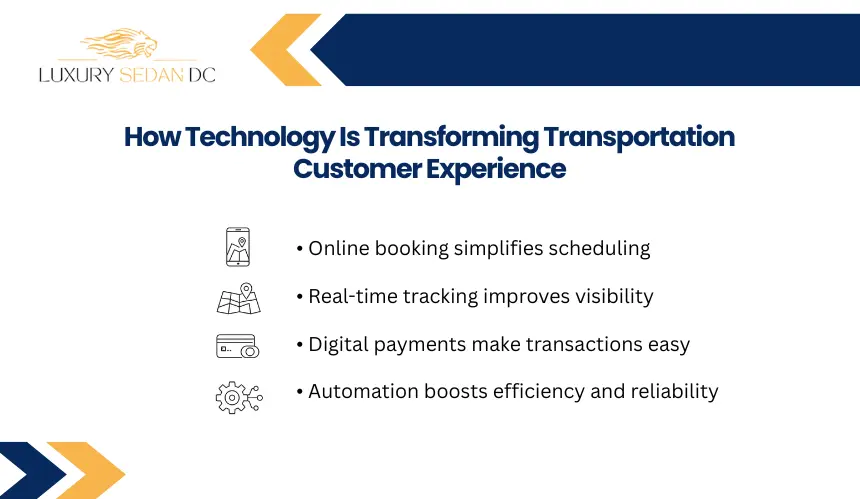
Technology has become a major driver of improvements in modern mobility services. Digital platforms, automation tools, and data-driven systems now help transportation providers deliver faster, more reliable, and more transparent services. As a result, technology plays an essential role in shaping the customer experience in transportation services, allowing passengers to interact with transportation providers more easily and with greater confidence.
By integrating technology into booking systems, trip coordination, and communication processes, transportation companies can improve both operational efficiency and passenger satisfaction.
Online Booking Platforms
Online reservation platforms have transformed how passengers arrange transportation. Instead of relying on manual reservations or phone calls, travelers can now schedule transportation through websites or mobile applications within minutes. These platforms provide clear trip details, pricing information, and available vehicle options, helping passengers plan their travel more efficiently.
Modern booking platforms often allow users to:
- Schedule transportation in advance
- Choose vehicle types based on travel needs
- View estimated travel times and routes
- Receive instant confirmation for reservations
These features simplify the booking process and reduce uncertainty when arranging transportation.
Did You Know?
Digital booking platforms have significantly increased efficiency in transportation services, with many companies reporting that online reservations now account for a large portion of scheduled transportation bookings.
Real-Time Trip Tracking and Updates
Real-time tracking technology has also improved transparency during transportation services. Passengers can now monitor their driver’s location, estimated arrival time, and trip progress directly from their mobile devices. This visibility reduces uncertainty and helps passengers coordinate their travel schedules more effectively.
Real-time updates often include:
- Notifications when the driver is approaching
- Estimated arrival times at pickup locations
- Updates if traffic conditions change
- Live vehicle tracking on a map interface
These features allow passengers to stay informed and better prepare for their ride.
Did You Know?
Transportation systems that provide real-time trip updates and tracking have been shown to improve passenger confidence, as travelers can see exactly when their vehicle will arrive.
Digital Payments and Automated Reservations
Another important technological advancement is the integration of secure digital payment systems. Passengers can now complete payments electronically through credit cards, mobile wallets, or corporate travel accounts. This eliminates the need for cash transactions and simplifies the overall payment process.
Automated reservation systems also allow transportation providers to manage schedules more efficiently by coordinating vehicles, drivers, and trip assignments in real time.
Key benefits of digital payment and automation include:
- Faster and more secure payment processing
- Automatic digital receipts for passengers
- Reduced administrative workload for transportation companies
- Improved trip scheduling and dispatch coordination
Did You Know?
Many transportation providers now use advanced fleet management and dispatch systems that analyze trip schedules and traffic patterns to assign drivers and vehicles more efficiently.
By integrating technology across booking, trip monitoring, and payment systems, transportation providers can significantly improve the convenience, transparency, and reliability of the passenger experience.
Why Comfort, Convenience, and Trust Matter for Passengers
In modern mobility services, passengers often evaluate transportation providers based on how comfortable, convenient, and trustworthy the overall experience feels. These factors strongly influence whether travelers feel confident relying on a service repeatedly. A positive customer experience in transportation services often emerges when passengers feel that their trip will be smooth, predictable, and handled professionally from start to finish.
Comfort, convenience, and trust are closely connected. When transportation providers deliver reliable service, maintain high vehicle standards, and communicate clearly with passengers, travelers are more likely to view the service as dependable and worth using again.
Reducing Travel Stress
Transportation can be one of the most stressful parts of a trip, particularly when travelers are navigating unfamiliar areas, dealing with tight schedules, or trying to catch flights on time. A well-organized transportation experience helps minimize these pressures by providing clear coordination and reliable service.
Transportation providers reduce travel stress by focusing on:
- Accurate pickup scheduling
- Reliable route planning
- Professional driver assistance
- Clear communication about trip details
When passengers feel confident that transportation logistics are handled properly, they can focus on their travel purpose rather than worrying about delays or navigation challenges.
Did You Know?
Travel behavior studies indicate that uncertainty in transportation schedules is one of the most common sources of travel-related stress, particularly for airport travelers and business passengers.
Productive Travel for Business Passengers
For many professionals, travel time can serve as an opportunity to prepare for meetings, review schedules, or handle communication tasks. A comfortable and quiet transportation environment allows business travelers to remain productive while moving between locations.
Transportation services that support productivity often provide:
- Quiet vehicle interiors
- Comfortable seating arrangements
- Smooth driving that allows passengers to focus on work
- Reliable travel times that align with business schedules
These features make transportation an extension of the workday rather than a disruption to it.
Did You Know?
Business travel research shows that many professionals use travel time to review presentations, respond to emails, or coordinate meetings, highlighting the value of a comfortable travel environment.
Consistency and Service Reliability
Trust is built through consistent service delivery. When passengers repeatedly experience punctual pickups, professional driver conduct, and well-maintained vehicles, they develop confidence in the transportation provider. This consistency is particularly important for travelers who rely on transportation services regularly for business trips or airport transfers.
Transportation providers build trust by maintaining consistent standards such as:
- Reliable scheduling and punctuality
- Professional driver training and conduct
- Routine vehicle maintenance and cleanliness
- Transparent communication with passengers
Did You Know?
Customer experience research consistently shows that service consistency is a major factor influencing repeat bookings, as passengers prefer transportation providers they know will deliver dependable service.
By prioritizing passenger comfort, travel convenience, and service reliability, transportation companies can strengthen trust with their customers and create a transportation experience that passengers are more likely to value and repeat.
How Transportation Companies Improve Customer Experience
Transportation companies continually refine their operations to improve service quality and passenger satisfaction. Delivering a strong customer experience in transportation services requires attention to both operational efficiency and service-oriented practices. Providers that prioritize customer experience often invest in driver training, vehicle quality, and responsive customer support systems to ensure passengers receive reliable and professional transportation.
These improvements help transportation companies maintain high service standards while meeting the evolving expectations of modern travelers.
Driver Training and Professional Standards
Drivers are one of the most visible representatives of a transportation service, making their professionalism and conduct essential to customer experience. Many transportation providers implement structured training programs to ensure drivers understand safety procedures, passenger communication, and service etiquette.
Driver training programs typically focus on:
- Defensive driving and road safety practices
- Professional interaction with passengers
- Efficient navigation and route planning
- Handling passenger requests courteously
By maintaining strong professional standards among drivers, transportation companies can create a more consistent and respectful travel experience.
Did You Know?
Professional driver training programs often include defensive driving certification and hospitality-based service training, helping drivers provide both safe and courteous transportation.
Fleet Maintenance and Vehicle Quality
Vehicle condition also plays a major role in shaping the passenger experience. Transportation companies that maintain well-kept vehicles create an environment that feels comfortable, safe, and professional. Regular maintenance and cleaning help ensure that vehicles perform reliably while providing a pleasant travel environment.
Fleet management practices typically include:
- Scheduled mechanical inspections
- Routine interior and exterior cleaning
- Monitoring vehicle performance and safety systems
- Replacing aging vehicles to maintain service quality
Maintaining high vehicle standards helps transportation providers deliver consistent comfort and reliability to passengers.
Did You Know?
Many transportation companies follow strict fleet maintenance schedules to ensure vehicles remain safe, efficient, and comfortable for passengers throughout their service life.
Responsive Customer Support Systems
Customer support plays an important role in resolving issues and maintaining strong relationships with passengers. When questions arise or travel plans change, responsive support systems help ensure that passengers receive timely assistance.
Transportation companies often provide support through multiple communication channels such as phone, email, or mobile applications.
Customer support teams commonly assist with:
- Updating reservation details
- Providing trip confirmations and driver information
- Addressing service concerns or feedback
- Coordinating changes to travel schedules
Did You Know?
Customer service research shows that fast response times and clear communication significantly improve customer satisfaction, particularly when travelers encounter unexpected changes during their trips.
By investing in driver professionalism, vehicle quality, and responsive support systems, transportation companies can consistently deliver a reliable and customer-focused travel experience that meets the expectations of modern passengers.
Business Benefits of Strong Customer Experience in Transportation
Customer experience does not only influence how passengers perceive a transportation service; it also plays a major role in how transportation companies grow and maintain long-term success. A strong customer experience in transportation services can directly affect customer retention, brand reputation, and competitive positioning in a crowded mobility market. Companies that consistently deliver positive travel experiences often gain a stronger reputation and more repeat customers over time.
By focusing on service quality and passenger satisfaction, transportation providers can build sustainable relationships with their customers.
Customer Retention and Repeat Bookings
One of the most valuable outcomes of a positive transportation experience is customer retention. When passengers consistently receive reliable service, they are more likely to use the same provider again for future trips. Repeat customers are particularly important in transportation services because frequent travelers, such as business professionals or airport passengers, often rely on dependable transportation on a regular basis.
Transportation providers benefit from repeat bookings because:
- Returning customers reduce the need for constant new customer acquisition
- Loyal passengers often book services more frequently
- Regular customers develop long-term trust in the service provider
Did You Know?
Customer loyalty studies across service industries indicate that retaining existing customers is often significantly more cost-effective than acquiring new ones, making positive service experiences especially valuable.
Stronger Brand Reputation
Customer experience also plays a major role in shaping a company’s reputation. In today’s digital environment, passengers frequently share their transportation experiences through online reviews, ratings, and social media feedback. Positive experiences often lead to favorable reviews that attract new customers.
Transportation providers that maintain high service standards are more likely to receive strong customer feedback related to:
- Punctual pickups and reliable travel
- Professional driver behavior
- Clean and comfortable vehicles
- Smooth booking and communication processes
A strong reputation built on positive customer experiences can help transportation companies stand out in competitive markets.
Did You Know?
Consumer research consistently shows that online reviews significantly influence purchasing decisions, especially for service-based industries such as travel and transportation.
Competitive Differentiation in the Market
As transportation options continue to expand, companies must differentiate themselves through service quality rather than price alone. Customer experience provides a way for transportation providers to demonstrate reliability, professionalism, and consistency, qualities that many travelers value highly.
Companies that focus on improving customer experience often compete by offering:
- Reliable and punctual transportation
- Professional drivers and courteous service
- Well-maintained vehicles
- Clear communication throughout the journey
These service qualities help transportation companies attract customers who prioritize convenience, comfort, and dependable travel.
Did You Know?
Industry reports suggest that service experience has become one of the primary competitive factors in transportation markets, especially in regions where multiple mobility providers operate.
By prioritizing customer experience, transportation companies not only improve passenger satisfaction but also strengthen their long-term business performance through loyalty, reputation, and market differentiation.
Frequently Asked Questions
Why is customer experience important in transportation services?
Customer experience is important in transportation services because it directly affects passenger satisfaction, reliability, and long-term trust in a service provider. Travelers expect more than basic transportation; they value punctual pickups, professional drivers, comfortable vehicles, and clear communication throughout the journey. When transportation companies consistently deliver these elements, passengers are more likely to use the service again and recommend it to others.
What factors influence passenger satisfaction during transportation?
Passenger satisfaction in transportation is influenced by several factors, including reliability, driver professionalism, vehicle comfort, and communication. Punctual pickups, safe driving practices, clean vehicles, and transparent pricing all contribute to a positive travel experience. Clear updates about pickup times or trip details also help passengers feel more confident about their transportation arrangements.
How does technology improve transportation customer experience?
Technology improves transportation customer experience by simplifying booking, improving communication, and increasing service transparency. Digital booking platforms allow passengers to schedule rides quickly, while real-time tracking systems provide updates on vehicle arrival times. Automated dispatch systems and digital payments also streamline trip coordination and reduce delays during the transportation process.
Why do travelers prefer professional transportation providers?
Many travelers prefer professional transportation providers because they offer structured service standards and greater reliability. Professional services often include trained drivers, scheduled pickups, well-maintained vehicles, and customer support systems that help ensure a smooth travel experience. These factors provide a level of consistency that can be especially valuable for airport travel, business meetings, and special events.
How do transportation companies measure customer satisfaction?
Transportation companies often measure customer satisfaction through feedback surveys, trip ratings, and customer reviews. After a trip is completed, passengers may be asked to evaluate their experience based on factors such as punctuality, driver professionalism, vehicle condition, and overall service quality. This feedback helps transportation providers identify areas where service improvements can be made and maintain high customer experience standards.